
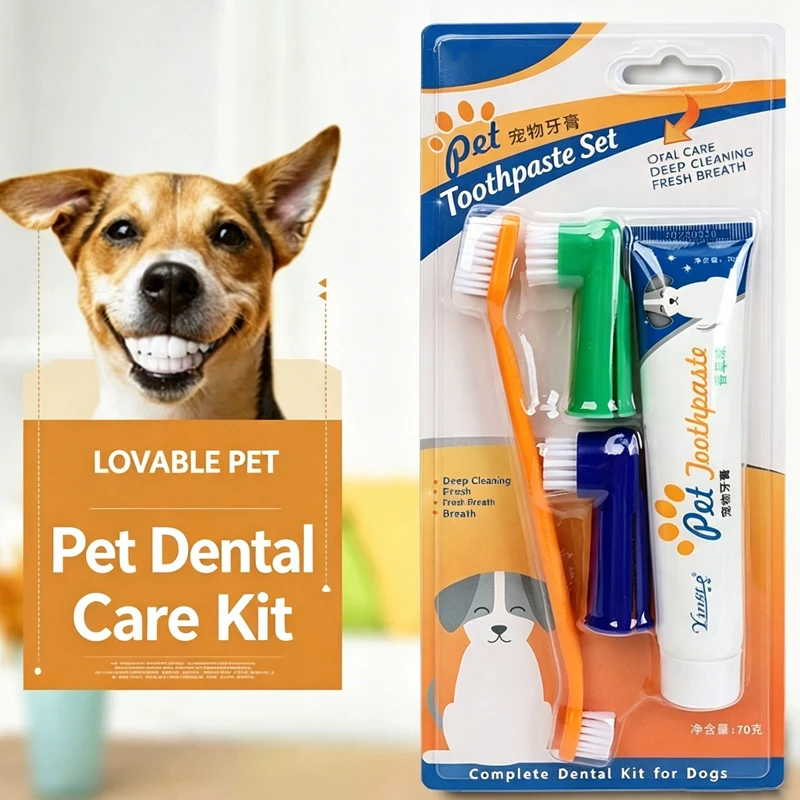
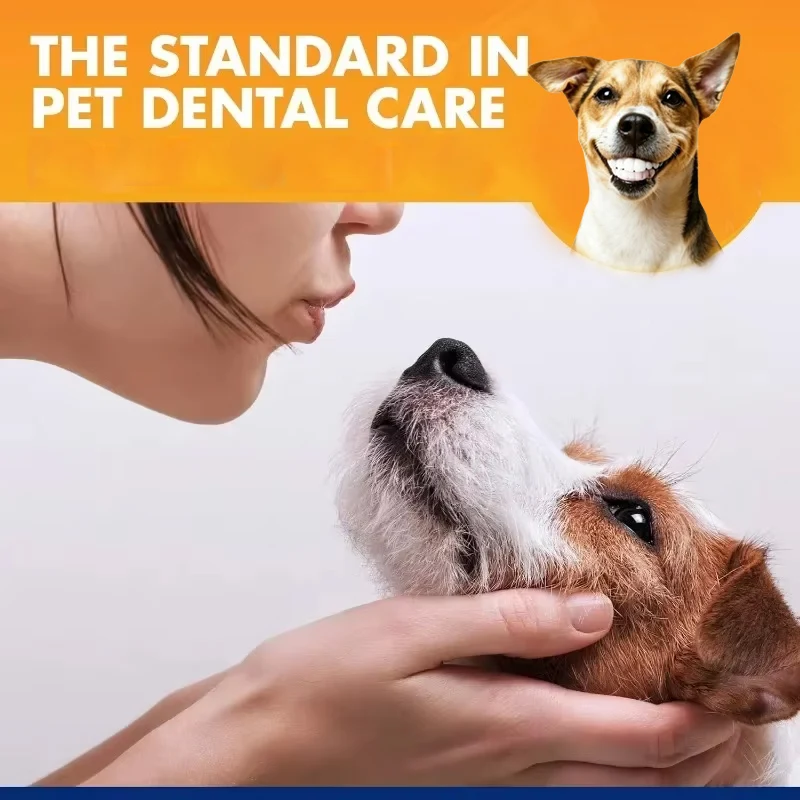
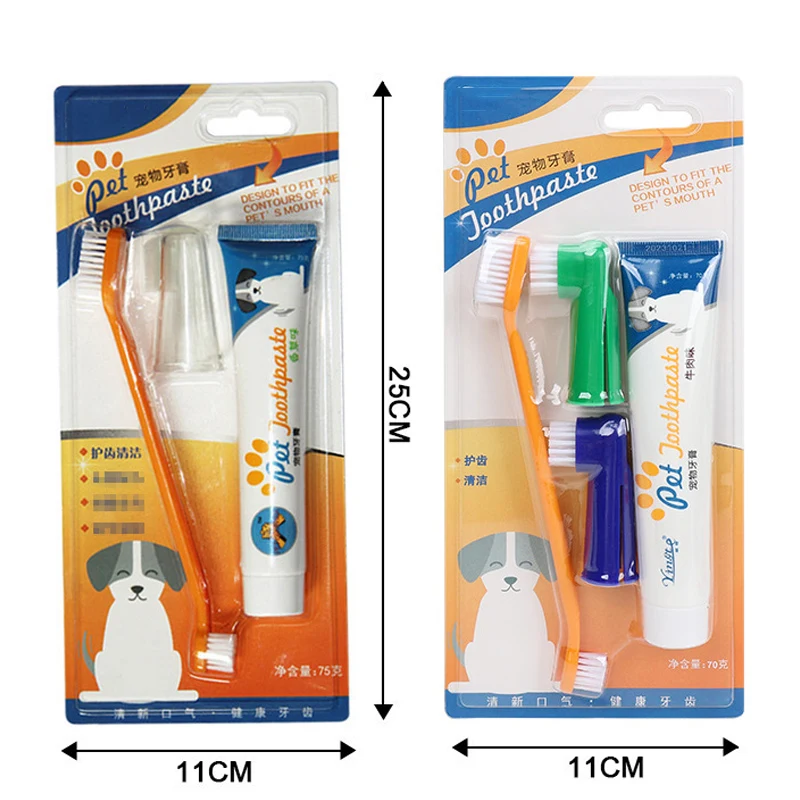
Dental disease is the most commonly diagnosed problem in adult dogs, and a scale and polish under general anaesthetic costs more than most people expect. Brushing genuinely prevents it. The barrier is never the equipment, it is the habit, so the kit that gets used is the one with a brush shape your dog will actually tolerate – which is why having three options in the box helps.
Key Benefits
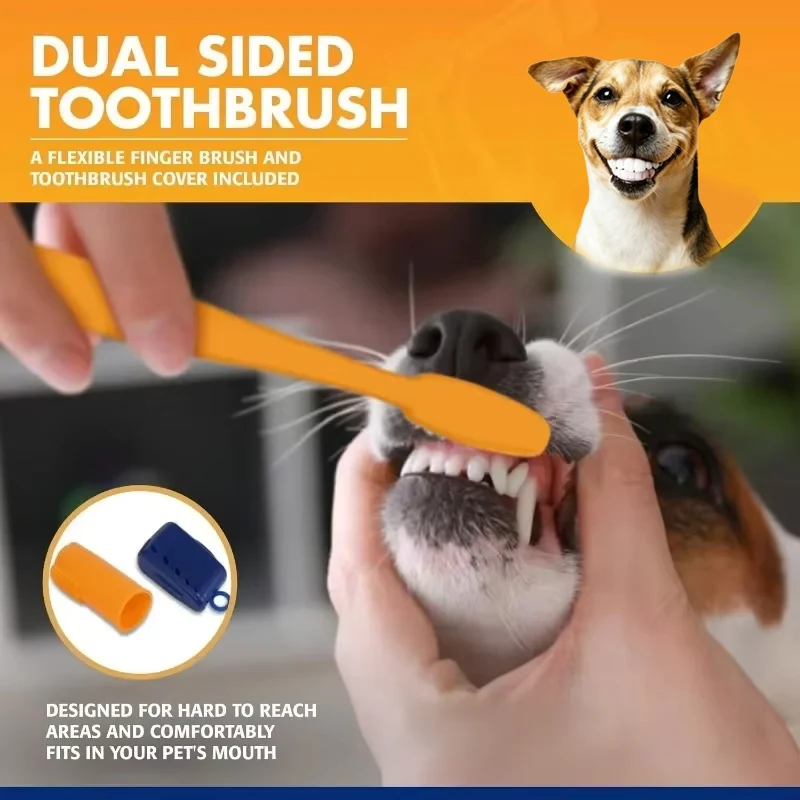
- Dual-ended brush covers large and small mouths
- Finger brush is far easier to start a nervous dog on
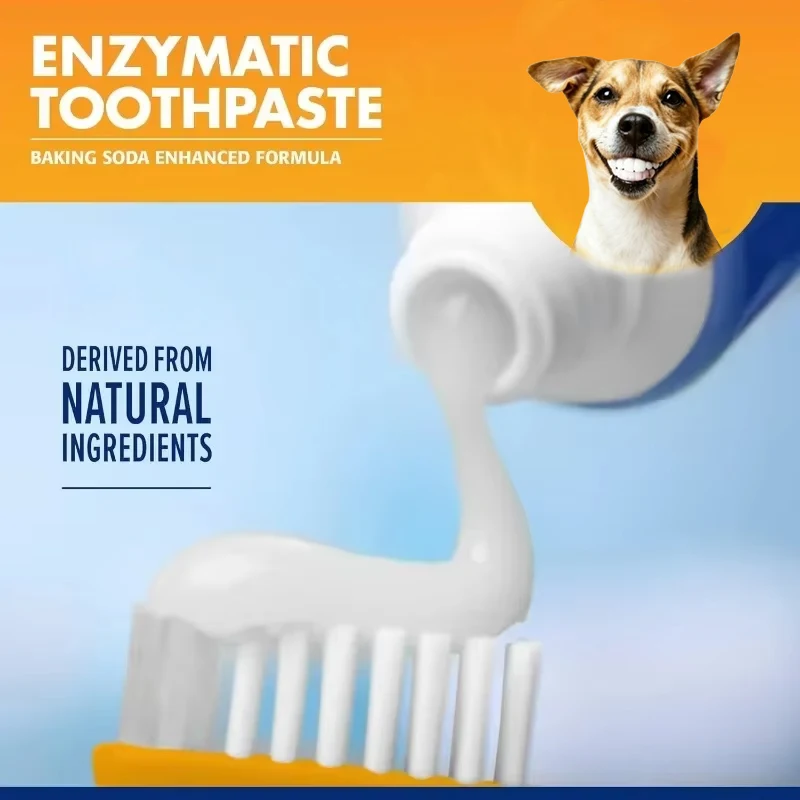
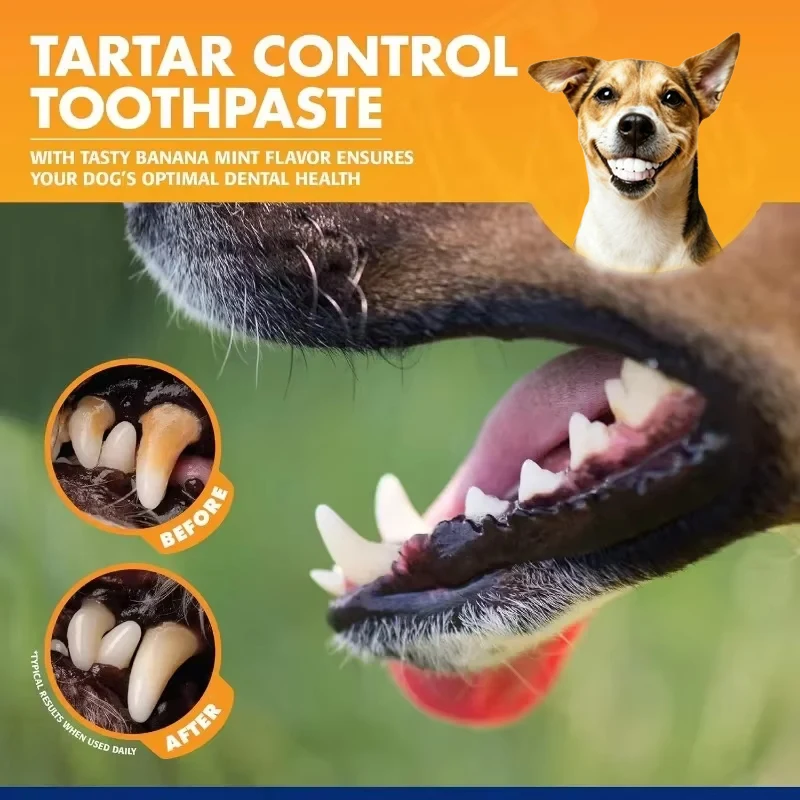
- Dog-safe paste in a flavour dogs will accept
- Costs a fraction of one professional dental clean
Best For
- Puppies, where the habit is easy to build from the start
- Small breeds and flat-faced dogs, who get dental disease earliest
- Any adult dog who has never had their teeth brushed
How It Works
Start by letting the dog lick the paste off your finger for a few days. Then the finger brush on the outer surfaces only, ten seconds, then stop and reward. Build up over a fortnight. The outer surfaces are where tartar forms, so you do not need to get inside the arch, which is the part dogs object to most.
Pros and Cons
Pros: Prevents a genuinely expensive and painful problem, and the multiple brush shapes raise the odds you find one your dog accepts.
Cons: None of it works unless you do it several times a week, and most people stop after the first fortnight.
Things to Consider
- Never use human toothpaste – fluoride and xylitol are toxic to dogs
- Build up slowly over two weeks; forcing a brush into a dog’s mouth on day one ends the project
- Brushing prevents new tartar but will not remove existing build-up – that needs a vet
- Prices, availability and shipping times are set by the AliExpress seller and can change
Affiliate notice: LookDog may earn a commission if you purchase through this link, at no additional cost to you.
Reviews
There are no reviews yet.