

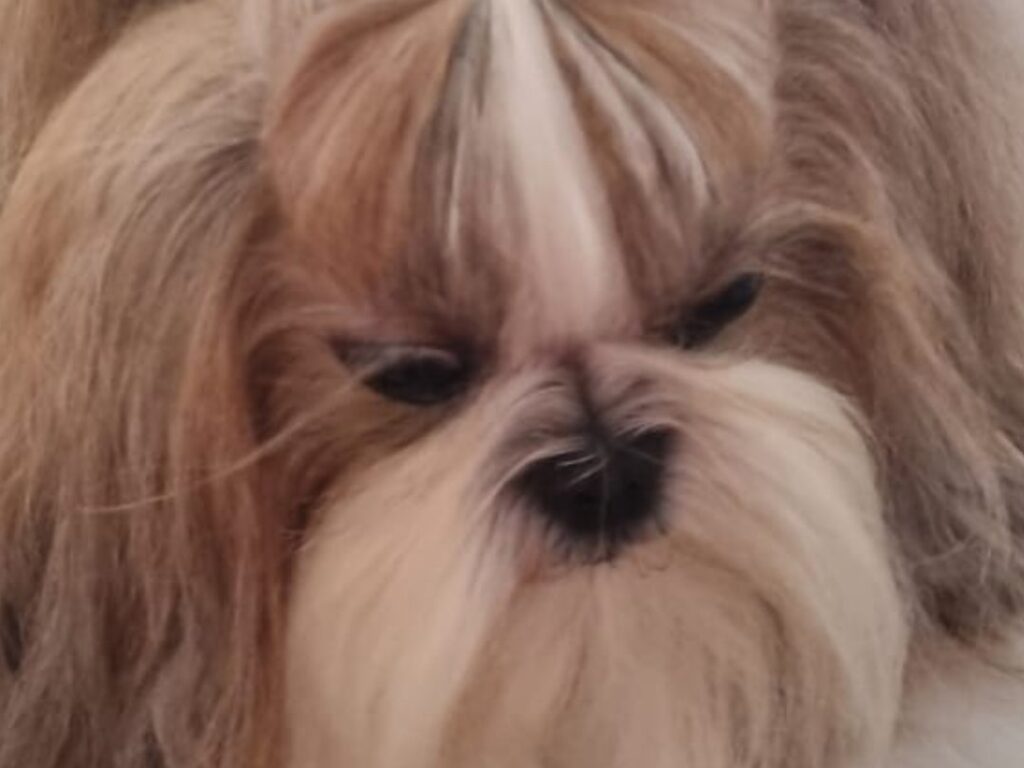
The rust-brown streak running down from the inner corner of the eye is one of the first things people notice on a light-coated dog, and one of the hardest to get rid of. Bell, the Shih Tzu behind LookDog, has it too. Her eyes get wiped once a day, every day, and that routine is what this guide is built on.
The honest starting point is that a tear stain is not dirt. Wiping keeps it under control, but the stain is the symptom. The real questions are why the eye is watering and why the fur below it stays wet.
What the Brown Actually Is
Tears carry pigments called porphyrins, which turn reddish-brown when they sit in fur and meet the air. On a dark coat you never see them. On a white, cream or gold coat, every tear that runs down the face leaves a little behind, and it builds up into that familiar streak.
Fur that stays damp also suits yeast. When the stain turns darker, looks greasy or starts to smell, yeast has usually moved in on top of the pigment. That is the point where a stain stops being cosmetic, because the skin underneath can get sore.
Why Flat-Faced Dogs Water So Much
Shih Tzus, Pekingese, pugs, Lhasas and the other short-nosed breeds have shallow eye sockets, so the eye sits further forward and has less protection. On top of that, several things can keep tears running down the face instead of draining away:
- Hair touching the eye. The hair on the nose fold and in the inner corner brushes the eye all day, and the eye waters to protect itself. It also acts like a wick, drawing tears down into the coat.
- Lashes or eyelids that rub. Extra lashes growing along the lid edge, or a lid corner that rolls slightly inward, are common in these breeds and easy to miss at home.
- Tear ducts that do not drain well. A narrow or blocked duct sends tears over the lid instead of down into the nose.
- Irritation. Allergies, dust and smoke all make eyes water more.
Only a vet can tell you which of these applies, and some of them are fixable. It is worth asking at the next check-up, especially if the staining is heavy.
The Daily Wipe
Once a day is the rhythm that works. Tears that are wiped the same day come away easily. Tears left for a few days dry into a hard crust that pulls at the fur and takes the stain deeper.
- Settle the dog first. Bell lies on a lap with a hand resting on her head. A dog who feels held still will hold still. Chasing a dog around the room with a cotton pad does not work.
- Dampen a cotton pad, do not soak it. Use plain water, saline, or a tear stain cleaner, and follow the cleaner’s label. Put the liquid on the pad, never straight onto the face, and keep it out of the eye itself unless the label says it is made for that.
- Wipe from the inner corner outwards and down, away from the eye, never towards it. A fresh pad for each eye, so you are not carrying anything from one to the other.
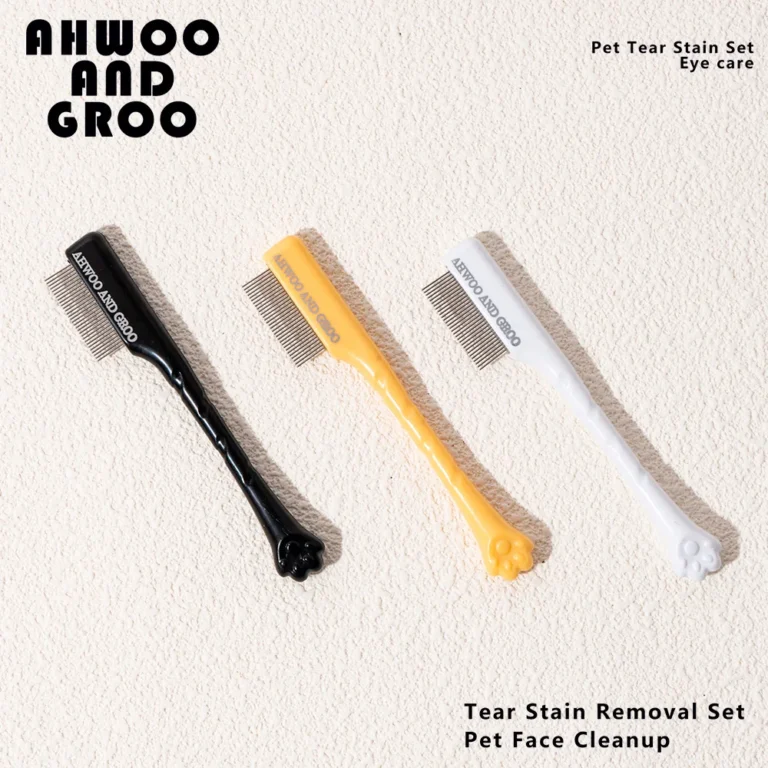
- Soften crust before you comb it. Hold the damp pad on it for a few seconds first. Then lift it out with a fine comb in short strokes away from the eye. A face and eye comb with blunt tips is made for exactly this spot, which every normal comb is too coarse for.
- Dry the fur afterwards. This is the step most people skip, and it is the one that matters most. Damp fur is what turns tears into a stain. Press a dry pad or tissue into the area until it is dry to the touch.
On busy days, pre-moistened tear stain wipes do the same job with no liquid anywhere near the eye. Bell’s own bottle is a local Israeli brand, so readers elsewhere will not find it. Its label gives the same method as above: soak the pad, clean from the eye downwards, a fresh pad for each eye, and dry well afterwards. For a stubborn stain it allows up to three times a day for a week, then once or twice a week to keep it away. Whatever you use, the method matters more than the brand, and the cleaner goes on the fur around the eye, not into it.
Outside Israel, the closest thing to Bell's routine is a two-step kit: a solution for the cotton pad, then a powder that keeps the stained fur dry. This one contains no antibiotics. The powder goes on the fur under the eye, never into the eye itself.
As an Amazon Associate I earn from qualifying purchases.
Keep the Hair Short Under the Inner Corner
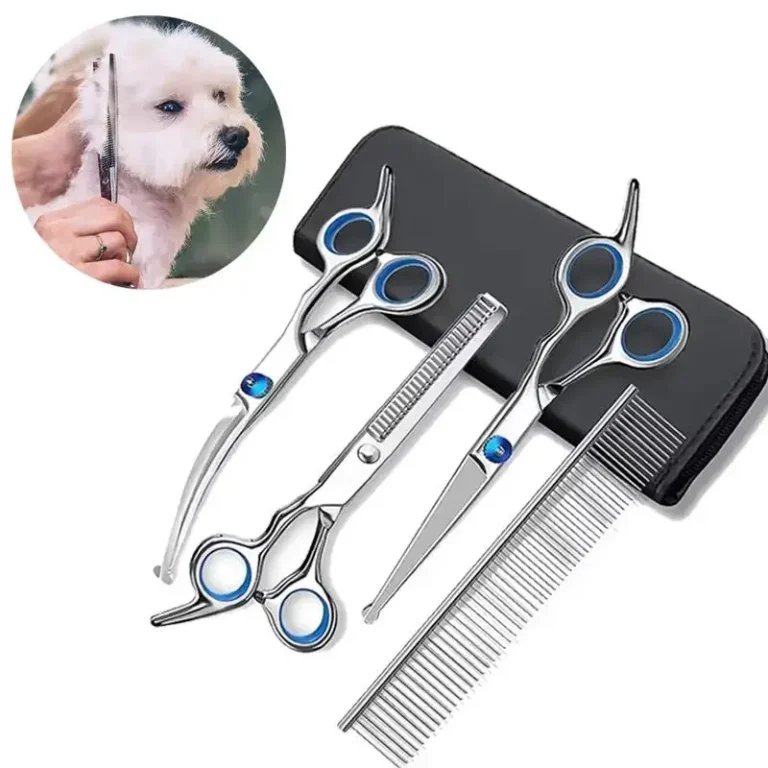
Trimming the small patch of hair just below the inner corner of the eye helps more than any product. Less hair means less wicking, the area dries faster, and there is less for the stain to cling to. Use rounded-tip grooming scissors, keep the blades pointing away from the eye, and only do it with a dog who is completely still. If your dog will not settle for it, this is a two-minute job to ask your groomer for at every visit.
What to Skip
- Tear stain powders and chews that contain antibiotics. Some products sold for tear stains have contained tylosin, an antibiotic, and in 2014 the US FDA told the makers of several of them to stop selling them, because tylosin is not approved for use in dogs or cats at all. Giving a dog antibiotics every day to change the colour of their fur is not a trade worth making. Read the ingredients.
- Hydrogen peroxide, bleach, or whitening products near the eye. One slip and it is in the eye.
- Cotton buds pointing at the eye. A dog who moves at the wrong moment turns a cleaning tool into a poke.
What to Expect
A stain that is already in the fur mostly will not wash out. What changes is the new growth: with a daily wipe, a dry face and a short trim, the fur that grows in stays lighter, and the old stained hair grows out and gets trimmed away. That takes weeks, not days. Judge it after a month, not after a week.
Some flat-faced dogs will always water a little. For them the goal is not a spotless white face. It is clean, dry, comfortable skin under the eyes.
When It Is a Vet Visit, Not a Cleaning Job
- Squinting, or keeping one eye half closed
- Redness, or a cloudy or bluish look to the eye
- Yellow or green discharge instead of clear tears
- Pawing at the eye or rubbing the face on the floor
- A sudden change: one eye starting to water heavily, or staining that appears in an adult dog who never had it
Flat-faced breeds can injure the surface of the eye more easily than most dogs, and eye problems get worse quickly. Any of these is a same-week appointment, not something to wipe and watch.
For the rest of the coat, Dog Grooming at Home covers coat types, tools and how often. Everything we list for face and coat care: Grooming.