
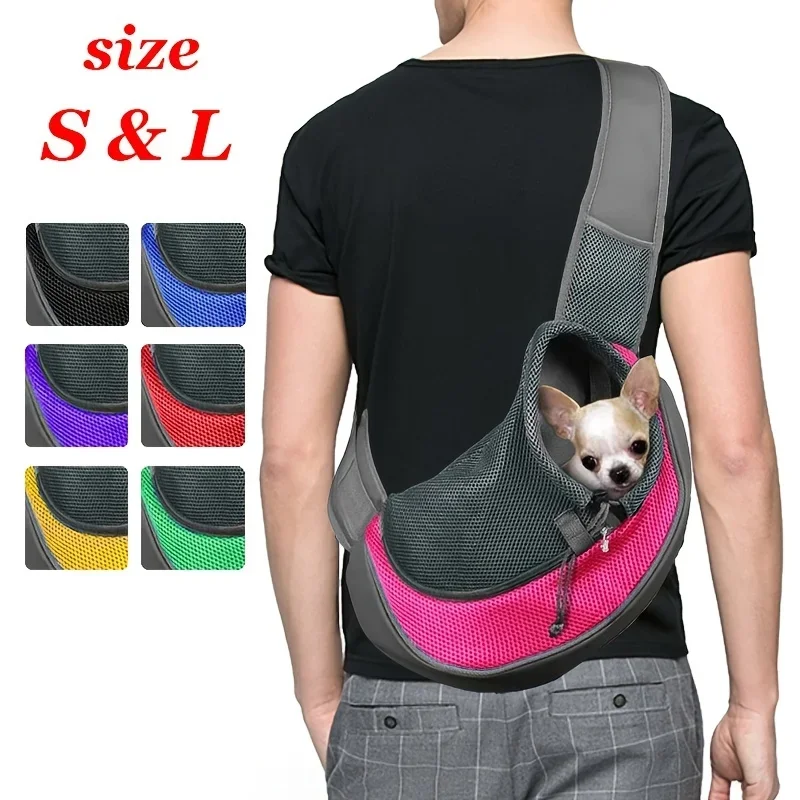



Structured carriers take up space whether or not the dog is in them, which is a problem when the dog only needs carrying for the last ten minutes of a walk. A sling is barely more than a strap and a pouch: worn crossbody, folded into a bag when unused, and out again when your dog decides it has finished walking.
Key Benefits
- Folds down small enough to live in a handbag
- Crossbody strap spreads the weight diagonally
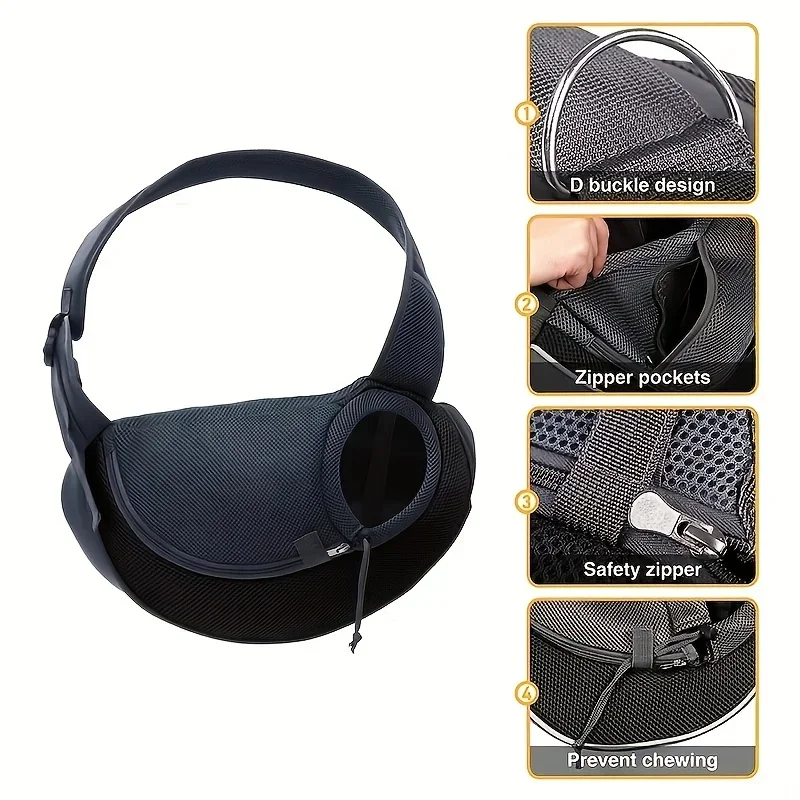
- Mesh panel keeps airflow to the dog
- Fast to get a dog in and out of
- Machine washable, unlike structured carriers
- The cheapest way to carry a small dog occasionally
Best For
- Small dogs that tire on the way home
- Short trips into shops and cafes
- Older dogs that walk out but not back
- Owners who dislike bulky carriers
- Keeping in a bag for occasional use
How It Works
Adjust the strap so the pouch sits at your hip rather than swinging near your knee, and keep a hand on the dog until they settle. Clip the internal tether to a harness. Because a sling gives less lateral support than a structured bag, it suits calm dogs far better than wriggly ones.
Pros and Cons
Pros: Packs to almost nothing, quick in and out, washable, and cheap enough to keep in a bag on the off chance.
Cons: It offers much less support and containment than a structured carrier, and a wriggling dog can get a leg or head out. It concentrates weight on one shoulder over distance, and the fabric offers no protection if you knock into something.
Things to Consider
- Calm dogs only — a wriggler can work its way out
- Less support than a structured carrier
- One-shoulder load gets uncomfortable over long distances
- Always use the internal tether, clipped to a harness
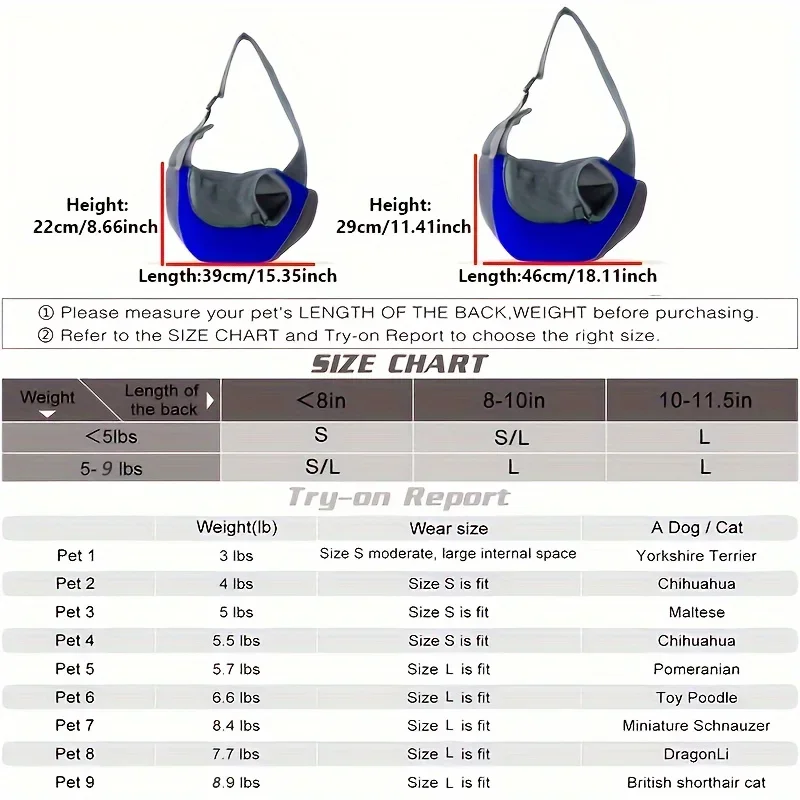
- Check the weight limit before ordering
- Prices, availability and shipping times are set by the AliExpress seller and can change
Affiliate notice: LookDog may earn a commission if you purchase through this link, at no additional cost to you.


Reviews
There are no reviews yet.