

Before you choose a carrier, answer one question: where will you actually be carrying your dog, and for how long? The answer rules out most of the options before price or looks come into it.
A sling that is perfect for the last ten minutes of a walk is miserable across an airport. A trolley that glides through a station is useless on the stairs down to the platform. A lot of carriers end up in a cupboard for the same reason: they were bought for how they look rather than for the trip we actually take.
Start With the Trip
| Where you are going | What suits it | What goes wrong |
|---|---|---|
| The end of a walk, when your dog has had enough | A sling that folds into a pocket | The weight hangs off one shoulder, and a wriggler can climb out |
| Crowds, markets, busy pavements | A front chest carrier | Warm against your body, so short trips and cool days only |
| Real distance on foot | A backpack carrier | You cannot see the dog, and some dogs refuse an enclosed space outright |
| Cycling | A bike basket with an internal tether | The steering changes more than you expect |
| Shops, cafes, public transport | A structured shoulder carrier | Strict weight limits, and small dogs only |
| Airports, stations, long vet corridors | A trolley with a detachable bag | Wheels are no use on stairs, cobbles or grass |
| An old or recovering dog who still wants to go out | A stroller | Expensive, bulky, and no use on stairs or rough ground |
The Weight Goes Somewhere, and It Is Your Back
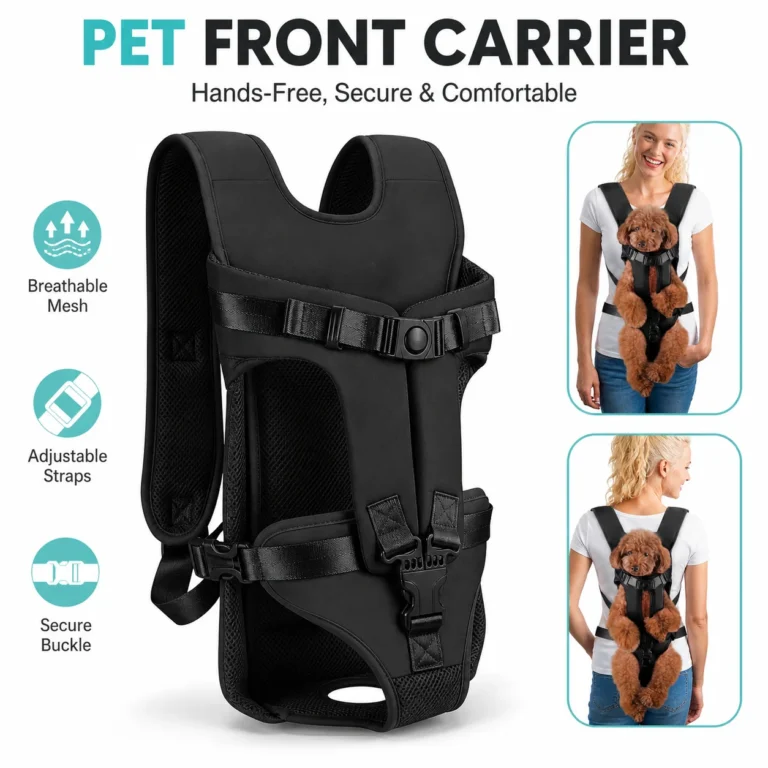
The formats differ less in how they treat the dog than in where they put the load on you. A sling hangs it off one shoulder: fine for ten minutes, wearing over an hour. A front carrier centres it against your chest and leaves both hands free, which is why it is the better choice in a crowd. You can hold a door or a rail, and your dog is pressed against you rather than swinging at hip height.
A front carrier of the kind this section describes: adjustable straps, the weight on your chest, both hands free. Check the listed weight limit against your dog before ordering, and keep trips short in warm weather.
As an Amazon Associate I earn from qualifying purchases.
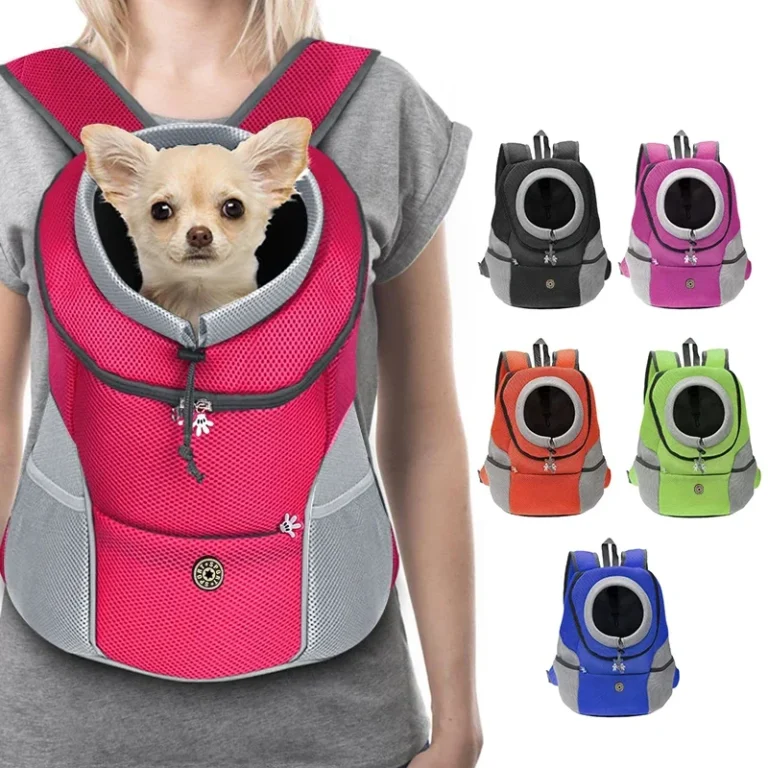
Over real distance only a backpack works, because it is the one format that spreads the weight across both shoulders and your back. A backpack carrier with an internal safety tether is the version to look for. The trade-off is that the dog is behind you. You cannot see them panting, shifting or trying to stand, so stop and check far more often than feels necessary.
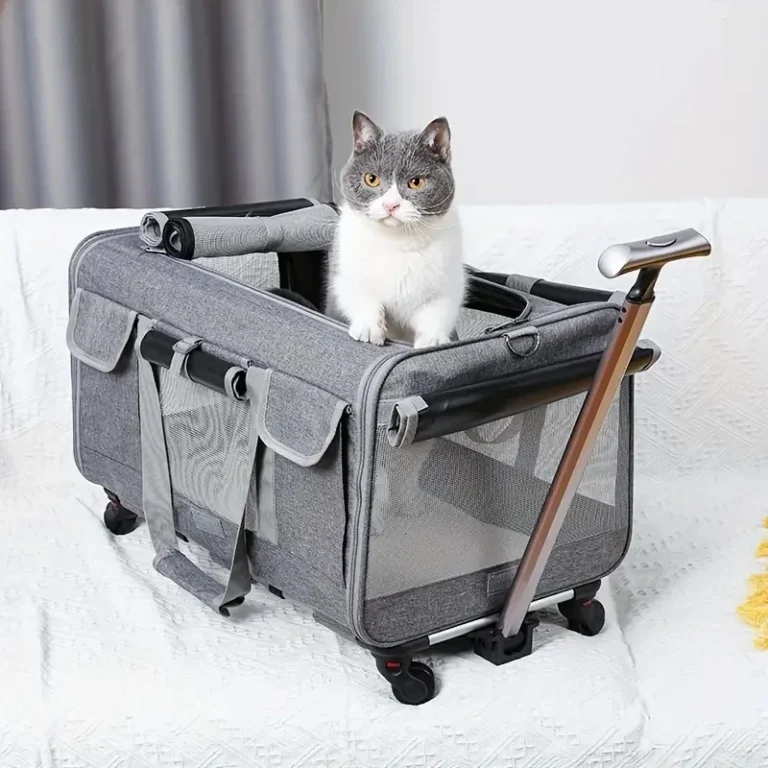
Past a certain weight, carrying stops being sensible at all. A trolley carrier with a detachable bag puts the dog on wheels for the long flat stretches and comes off for the steps. It is bulky, it is one of the more expensive things we list, and it does nothing for you on grass. For an owner with a bad back and a heavier small dog, it can still be the difference between a manageable trip and a dreaded one.
Size by Measurement, Not by the Label
Carrier sizes are built around cats and toy breeds, and “extra large” on a pet carrier is rarely extra large by dog standards. Breed names in a listing are a guess. Measure your dog standing, floor to the top of the head, and lying down, nose to the base of the tail. Then compare those numbers with the internal dimensions, not the outside of the bag.
Check the weight limit against what your dog weighs now, not what they weighed at the last vet visit, and leave some margin. A carrier loaded to its limit sags, strains its seams and hurts to carry.
Walls matter as well. A soft carrier that caves in when you set it down shrinks the space around the dog, and for a nervous dog that is the stressful part. A framed carrier that holds its shape costs more and stores worse. It is kinder to a dog who spends real time inside it.
Three Rules for Every Format
- Clip the internal tether to a harness, never to a collar. A dog who bolts from a carrier while clipped by the collar is caught by the neck.
- Heat is the main risk. A dog pressed against your body or zipped into fabric cannot cool down the way they can on the ground. In warm weather choose mesh, keep trips short and check them often. Never leave a dog zipped into a carrier in a parked car, whatever the ventilation.
- Introduce it at home first. Open, on the floor, with a treat inside, for days before it is ever zipped up and lifted. A dog whose first experience of a carrier is a trip to the vet learns exactly what the carrier means.
What a Carrier Is Not
It is not a car restraint. A bag on the back seat is contained, not restrained, and in a sudden stop it is a loose object like anything else in the car. What actually keeps a dog safe in the car is a different piece of equipment and a different decision.
It is not an airline carrier unless the airline says so. Cabin rules differ from one airline to the next, so treat any carrier as unapproved until the airline you are flying with has confirmed its exact dimensions.
And it is not a substitute for walking. A small dog who can walk comfortably should mostly walk; carrying is for the parts they cannot manage or should not have to. If a dog who used to walk happily has started stopping, sitting down or asking to be picked up, raise it with a vet before you buy anything. Stiff joints and sore feet can look a lot like reluctance.
Everything we list for carrying and travelling with a dog: Travel Gear.