



There is no dog breed that is safe for everyone with a dog allergy. When researchers measured the main dog allergen on so-called hypoallergenic breeds and in their owners’ homes, they did not find less of it. Breeds differ in how much hair they leave behind, which is not the same as how much allergen they make. That gap is where most of the confusion, and a fair amount of marketing, lives.
The claim
Poodles, poodle crosses, Bichons, Shih Tzus and a few others are often sold as hypoallergenic: dogs that people with allergies can live with. The reasoning sounds sensible. These coats shed very little, so there is less dog hair on the sofa, so there must be less of whatever makes people sneeze.
What the measurements found
In 2012, a team in the Netherlands measured Can f 1, the main dog allergen, in the hair and coats of Labradoodles, Poodles, Spanish Water Dogs and Airedale Terriers, all marketed as hypoallergenic, and compared them with Labradors and with ordinary dogs. The hypoallergenic dogs had more allergen in their hair and coats, not less. In their homes, the allergen in the air was no different between breeds, and floor dust was lower only in the Labradoodle homes. A study in the United States the year before reached the same conclusion: homes with hypoallergenic dogs did not have lower allergen levels than other dog homes.
The researchers also found that individual dogs varied more than breeds did. Two dogs of the same breed could differ by more than two dogs of different breeds.
Why hair is the wrong thing to count
The allergen does not come from hair. It comes mainly from the skin and saliva, and travels on tiny flakes of skin, on hair, and on anything the dog licks or lies on. A low-shedding coat means fewer visible hairs around the house; it does not mean the dog makes less allergen. A Shih Tzu’s coat, which grows continuously and barely sheds, holds on to skin flakes until it is brushed or bathed.
So why do some allergic people cope with certain dogs?
They often genuinely do, and they are not imagining it. People differ in how sensitive they are and to which dog proteins, and dogs differ individually. What the research shows is that you cannot predict it from the breed name. The only reliable test is time with the actual dog, ideally several visits including indoors, before committing, and a conversation with an allergist if your allergy is more than mild.
What does lower exposure, and by how much
Keeping the dog out of the bedroom. This is the standard first recommendation, because it gives you eight hours a night of lower exposure. Bell sleeps in our bed, so we are not the people to lecture anyone on it, but it is the change that matters most.
Bathing the dog. A small 1999 study found that washing a dog cut the allergen recovered from its hair by more than 80%, but levels were back to normal within about three days. To keep them down you would need to bathe twice a week, which is more than most coats and skins tolerate well. Our grooming guide explains why over-washing causes its own problems; ask your vet before going that far.
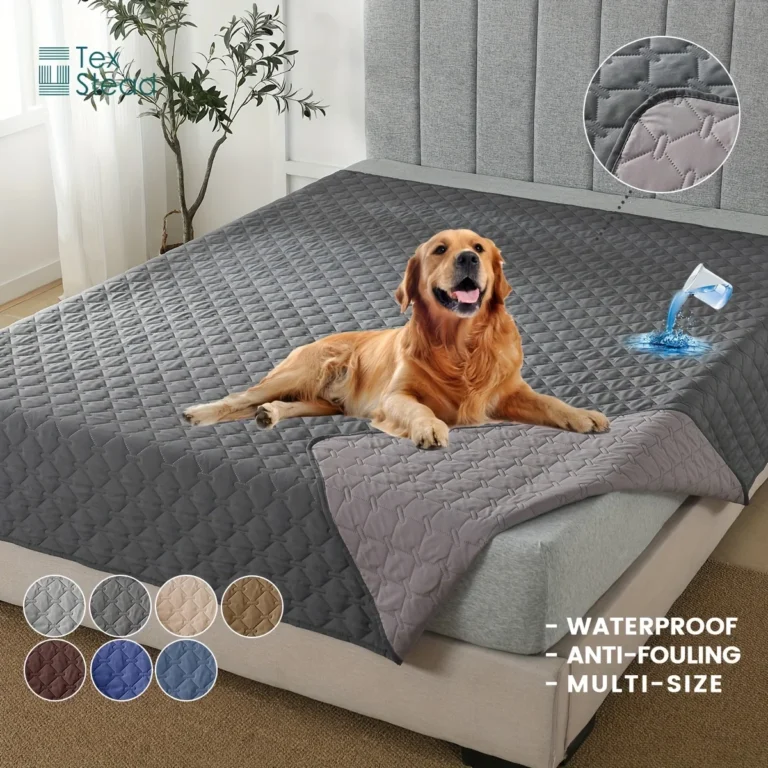
Washable covers where the dog lies. A waterproof sofa and bed cover that goes in the wash every week takes the dog’s favourite spots out of the equation. It does nothing for the air in the room.
Grooming, done by someone else. Brushing releases allergen, so the person with the allergy should not be the one doing it, and outdoors is better than indoors. A grooming vacuum kit collects loose hair and flakes at the brush instead of letting them settle around the house. It reduces the load; it does not remove the allergen the dog keeps making.
Hair out of the laundry. Bedding and throws carry allergen into every wash. A pet hair remover ball for the washing machine catches hair during the cycle. Washing the bedding every week matters more than the gadget.
What none of this can do
No product and no breed makes a home safe for someone with severe dog allergy or allergic asthma. If breathing is involved, that is a medical decision first and a dog decision second. Allergists can test which dog proteins you react to, and treatments exist that reduce sensitivity over time. Talk to one before the dog comes home, not after.
Sources: Vredegoor DW, Willemse T, Chapman MD, et al. Can f 1 levels in hair and homes of different dog breeds: lack of evidence to describe any dog breed as hypoallergenic. Journal of Allergy and Clinical Immunology, 2012; Nicholas CE, et al. Dog allergen levels in homes with hypoallergenic compared with nonhypoallergenic dogs. American Journal of Rhinology and Allergy, 2011; Hodson T, et al. Washing the dog reduces dog allergen levels, but the dog needs to be washed twice a week. Journal of Allergy and Clinical Immunology, 1999. This guide is general information, not medical advice.