
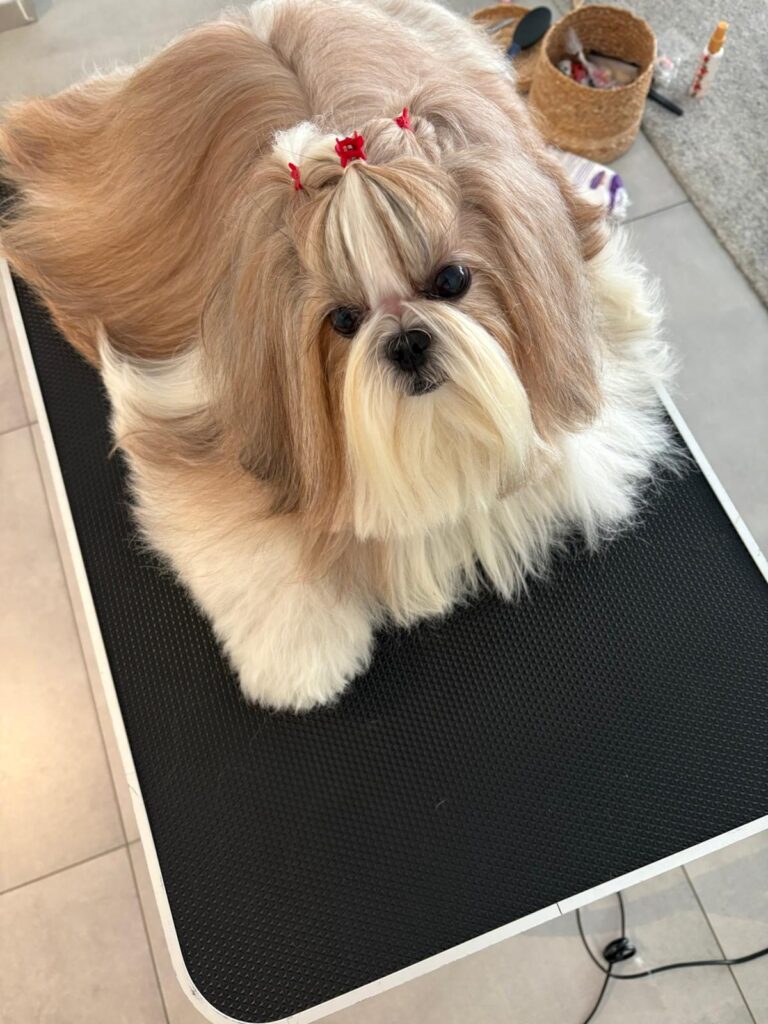
Most dogs’ ears look after themselves. Floppy, hairy ears like a Shih Tzu’s need a quick look every week and a clean when they are dirty, not on a timetable. Clean when the ear is dirty, not because it is Sunday: cleaning a healthy ear too often irritates it, and cleaning an infected one can hide what a vet needs to see.
Why some ears struggle
A dog’s ear canal is shaped like an L: it runs down the side of the head, then turns in towards the eardrum. Wax and moisture have to climb out of that bend. Long, heavy ear flaps and hair inside the canal keep the inside warm and damp, which is what yeast and bacteria like. In UK vet records, 5.5% of Shih Tzus were seen for an ear problem in a single year, less than flat-faced breeds as a group (7.3%) and far less than French Bulldogs (14%), but common enough to be worth a weekly look.
The weekly check, thirty seconds
- Lift the ear flap in good light.
- Look: a healthy ear is pale pink inside, with little or no wax.
- Smell: a healthy ear smells of very little. A sour, yeasty or rotten smell is a sign in itself.
- Feel the flap: it should not be hot, thickened or tender.
If everything looks normal, you are done. There is nothing to clean.
Cleaning a dirty ear, step by step
- Use a dog ear cleaner your vet recommends, at room temperature. Not water, vinegar, alcohol or hydrogen peroxide; all of them irritate the canal.
- Hold the flap up and fill the canal with cleaner as the label directs.
- Massage the base of the ear, below the opening, for twenty to thirty seconds. You should hear a soft squelch; that is the cleaner loosening wax down in the bend.
- Let go and step back. Your dog will shake, and the shake brings the loosened wax up.
- Wipe away what has come up from the opening and the inside of the flap with cotton wool or an ear cleaning wipe. Only go as far as your finger reaches comfortably.
- Finish with a treat, so the next time is easier than this one.
Never push cotton buds into the canal. They pack wax further down into the bend and can scratch the lining. Wipes clean the part of the ear you can see; they do not reach the canal and they do not treat anything.
How often
Only when you can see wax or dirt, and after swimming or a bath if water got in. For many dogs that is every few weeks; for some it is almost never. The bathing section of our grooming guide covers keeping water out of the ears in the first place, and if bath time itself is the struggle, see my dog won’t hold still for a bath.
What about the hair inside the ear?
This is genuinely debated, and there is no good trial either way. The Merck Veterinary Manual’s advice is to leave ear hair alone if it is not causing a problem, and if your vet thinks removing it would help your dog, to have them show you how. Plucking hair out of a healthy ear can inflame the canal. Trimming the hair around the outside of the opening, with rounded-tip scissors and never into the canal, is a gentler way to let some air in.
When it is an infection, not dirt
- Head shaking or scratching at one ear.
- A bad smell, redness or swelling.
- Brown, yellow or bloody discharge.
- Pain when the ear is touched, or the dog pulling away.
- A head tilt, loss of balance or walking in circles: see a vet the same day.
If you see any of these, stop cleaning and book a vet. They need to look down the canal and often take a swab to see whether it is yeast or bacteria, because the treatment is different. Some ear cleaners are not safe if the eardrum is damaged, which only a vet can check. An infection treated early usually clears quickly; one that has been cleaned at home for weeks tends to be harder to clear.
Sources: Merck Veterinary Manual, ear infections and otitis externa in dogs (pet owner version); Dale F, Brodbelt DC, West G, et al. Demography, common disorders and mortality of Shih Tzu dogs under primary veterinary care in the UK. Canine Medicine and Genetics, 2024. This guide is general information, not veterinary advice.