
Dogs sleep between twelve and fourteen hours a day, and older dogs and puppies considerably more. Whatever they sleep on, they are on it longer than you are on your mattress. That is the whole argument for taking dog beds seriously, and it is also why the two mistakes people make — buying too small and washing too rarely — matter more than they look.
Measure the Dog Stretched Out, Not Curled Up
Almost every bed that turns out too small was bought by looking at a dog asleep in a ball. Dogs curl when they are cold, unsettled or on something too small for them, and they stretch out flat when they are warm, relaxed and have the room. A bed that only works for the curled position quietly removes the other one.
Measure from nose to base of tail with the dog lying on its side, then add 15 to 25cm. For a bolster bed, measure the internal sleeping area rather than the outer dimensions — listings quote the outside, and a raised rim can eat 10cm off each side.
Size up for a puppy. Buying a bed that fits an eight-week labrador means buying another one by Christmas.
Bed Types, and Who Each One Suits
| Type | What it does well | Where it falls down | Suits |
|---|---|---|---|
| Flat mat or pad | Cheap, washes easily, fits a crate | No support, no head rest | Crates, car boots, second beds |
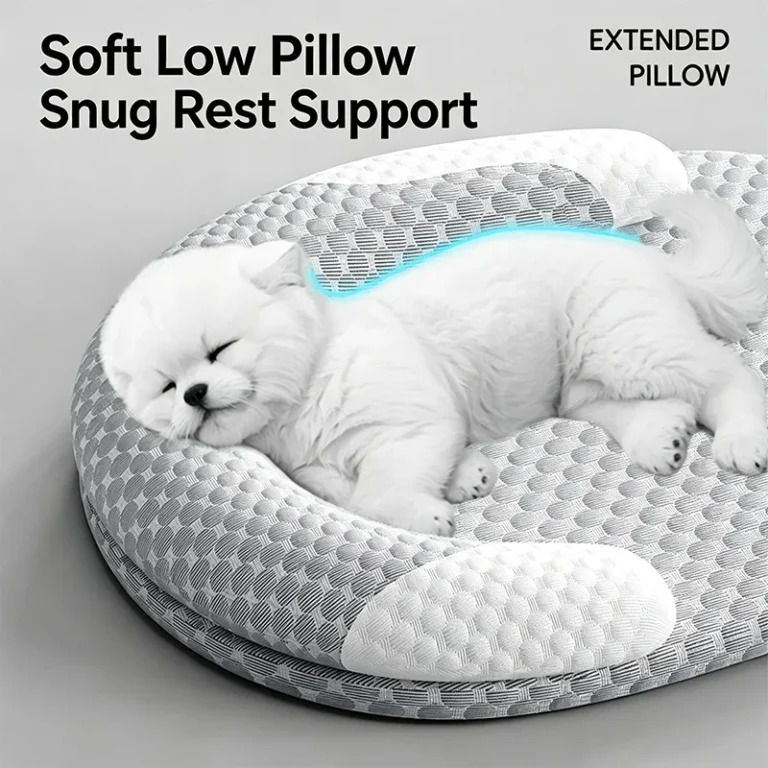
| Bolster or sofa bed | Raised edge for the head; dogs like a wall | Rim steals sleeping area | Dogs who sleep against something |
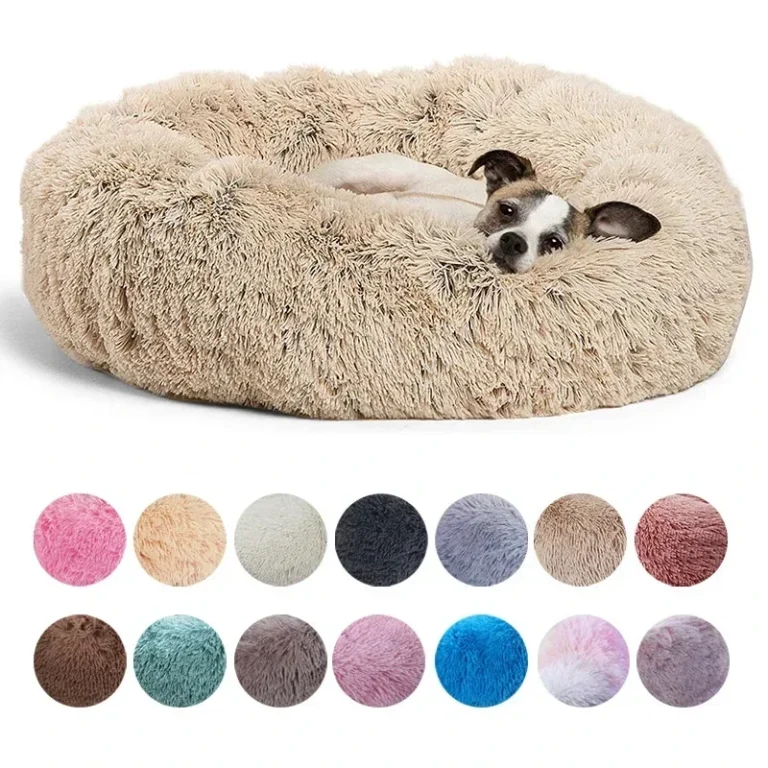
| Donut or calming bed | Enclosing; suits dogs who curl | No stretched-out position at all | Small and anxious dogs |
| Orthopaedic foam | Real support that does not bottom out | Price, and the word is unregulated | Seniors, arthritis, heavy breeds |
| Raised or cot bed | Airflow underneath; cool in summer | Hard to get onto for stiff dogs | Hot climates, outdoor use |
| Covered or den bed | Enclosure calms some dogs | Traps heat; wrong for thick coats | Small dogs, nervous dogs |
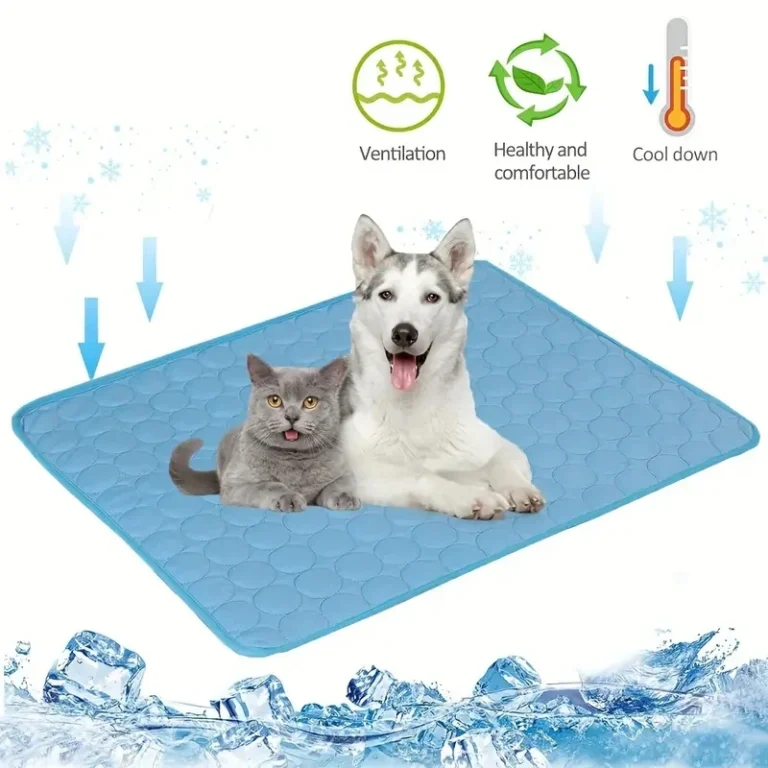
| Cooling mat | Sheds heat rather than trapping it | Not comfortable as a year-round bed | Summer, on top of a normal bed |
Watch the enclosing beds against the coat. A donut bed suits a whippet or a chihuahua and is often too warm for a husky, who will abandon it for the kitchen tiles by June. Where the dog chooses to sleep tells you more than any product description, including ours.
“Orthopaedic” Means Nothing on Its Own
There is no standard behind the word. Anyone can print it on any bed. What actually matters is whether the foam supports the dog’s weight without compressing flat, and you can test that with your hand: press down hard with the heel of your palm. If you reach the floor, the dog reaches the floor, and a bed that bottoms out is doing nothing for a painful joint.
- Solid foam beats shredded foam or fibre filling, which migrates to the edges and leaves a hollow where the dog lies
- Thickness matters more than the label — roughly 10cm or more for a large dog
- Memory foam softens in cold rooms and firms up in warm ones, which is worth knowing if the bed lives in a draughty hall
- A waterproof inner liner is the difference between one accident and a new bed, and it matters most for exactly the senior dogs who need the support
For a genuinely arthritic dog, the bed is worth spending real money on, and a thin mat is a false economy. Getting up is the hard part of their day, so a bed that is easy to rise from — firm, low, and not sunk into — is kinder than one that is merely soft.
Where You Put It Decides Whether It Gets Used
People buy a bed, put it somewhere sensible, and then wonder why the dog sleeps on the floor beside it. Dogs are specific about location in ways that have nothing to do with comfort.
- In the room the family is in — most dogs would rather be on a hard floor near you than on memory foam alone in a hallway
- Against a wall or in a corner, not marooned in open floor
- Out of the through-traffic — a bed in a doorway gets stepped over all evening and never becomes a place to switch off
- Away from radiators and direct sun, which turn a warm bed into one the dog abandons half the year
- More than one, if you can. A bed upstairs and a bed downstairs is how a dog stops sleeping on the sofa
If the dog keeps choosing the sofa, the sofa is telling you what they want: height, a view of the room, and a back to lean against. A bolster bed in the same corner gets closer to that than a flat mat in the kitchen. A furniture protector is the pragmatic answer if you would rather not fight about it at all.
Washing, and What Lives in a Dog Bed
Dog beds accumulate skin cells, saliva, outdoor dirt and, if there is ever a flea problem in the house, flea eggs and larvae. Adult fleas live on the dog; the vast majority of the population lives in the bedding and carpet, which is why treating the dog alone never ends an infestation. A flea comb is how you confirm you have one in the first place.
- Wash covers every one to two weeks, hot where the fabric allows
- Buy a bed with a removable, zipped cover. A bed you can only sponge-clean is a bed that stays dirty
- Two covers, or two beds, so washing does not leave the dog bedless for a day
- Vacuum around and under the bed when you strip it — that is where the flea larvae are
- Skip fabric softener; it coats fibres, kills absorbency and some dogs react to the perfume
- A washable blanket on top takes most of the dirt and goes in the machine weekly without wrestling a cover off foam
If a bed has started to smell even when clean, the foam itself has absorbed it and washing the cover will not fix it. That is the point at which a waterproof inner liner would have saved you the price of the bed.
Hot Weather
Dogs shed heat through panting and through the pads of their feet and their belly, which is why they seek out cold hard surfaces and lie flat on them. A bed that traps heat works against all of that, and the thick padded bed they loved in January becomes the reason they are sleeping on the bathroom floor in July.
Cooling products fall into three groups, and they are not equally useful.
| Type | How it works | Honest assessment |
|---|---|---|
| Pressure-activated gel mat | Absorbs body heat into a gel layer | Effective for about an hour, then it is body temperature. Fine for a nap, not a night |
| Water-filled pad | Water carries far more heat away than gel | Stronger and lasts longer; heavier, and a chewer makes a mess |
| Ice silk or rattan | Breathable weave that does not insulate | Gentle. Prevents overheating rather than actively cooling; best as a year-round summer bed |
Two rules for all of them. Put the mat on a hard floor rather than carpet, because a pad sitting on an insulating surface has nowhere to send the heat it collects. And always leave the dog a way off it — a dog that cannot choose to leave a cold surface is not being cooled, it is being trapped. An ice-silk bed with a rim tends to get used more than a bare mat, simply because it still feels like a bed.
None of this treats heatstroke. Heavy panting, thick drool, bright red gums, unsteadiness or collapse is an emergency: move the dog somewhere cool, wet them with cool — not ice — water, and ring a vet immediately.
Cold Weather, and a Word on Heated Beds
Most healthy adult dogs with a decent coat are fine at temperatures we find chilly. The ones who are not are specific: thin-coated breeds like greyhounds and whippets, very small dogs, puppies, seniors, arthritic dogs, and any dog that is unwell or underweight. For those, a bed off a cold floor with sides to hold warmth in does most of the work, and a blanket they can burrow under does the rest — burrowing is a strong instinct in terriers and sighthounds especially.
Heated beds and pads need care. They are genuinely useful for arthritic and elderly dogs, and they carry risks worth naming: a dog that cannot move off a heat source can be burned, and low-temperature burns happen slowly enough that the dog does not react in time. If you use one:
- Only ever cover part of the bed, so the dog can move to an unheated section
- Never for a dog that cannot reliably get up and move on its own
- Check the cable is chew-protected, and unplug it when nobody is in
- Use one with a thermostat rather than a plain heating element, and put a layer between it and the skin
If Your Dog Destroys Beds
Bed destruction is almost always one of three things, and the fix depends which. Puppies chew because they are puppies and their teeth hurt. Bored dogs shred because the bed is the most interesting object in an empty room. Anxious dogs, particularly those left alone, destroy bedding as part of a distress response — and that one is not solved by a tougher bed.
- Puppy chewing — cheap washable mats until the adult teeth are in, plus something they are allowed to chew
- Boredom — the answer is enrichment before you leave, not a stronger bed
- Separation-related destruction — usually paired with howling, pacing or accidents in an otherwise clean dog. Speak to your vet or a qualified behaviourist; replacing beds indefinitely treats the wrong thing
- Whatever the cause, stuffing and foam chunks are a genuine obstruction risk, so a bed that has been opened up comes out of service
Crate Bedding
A crate is a den, not a punishment, and what goes in it decides whether the dog agrees. Flat and washable beats deep and plush — a thick bed in a crate leaves no floor space and gets pushed into a heap. For a puppy still having accidents, a waterproof-backed mat saves the crate tray and your evening.
Do not put anything in a crate you would not leave with an unsupervised dog. That includes rope-edged mats and anything with a squeaker sewn inside.
The Short Version
- Measure the dog lying stretched out, then add 15 to 25cm; bolster beds lose space to the rim
- “Orthopaedic” is unregulated — press the foam with your palm and see whether you reach the floor
- Position beats padding. In the room with you, against a wall, out of the traffic
- Removable zipped covers, washed fortnightly. Fleas live in the bedding, not on the dog
- Gel mats work for about an hour; water-filled last longer; breathable weaves prevent overheating rather than actively cooling
- Always leave a route off any cooling or heating surface
- Repeated bed destruction is a behaviour question, not a durability one
Browse the beds and blankets we list, including the cooling range: Beds & Comfort.
This is general guidance, not veterinary advice. Sudden changes in where or how much your dog sleeps, difficulty getting up, or destruction that appears only when they are left alone are all worth a conversation with your vet.