

Dog tech is the category where the gap between what a product does and what the listing implies is widest. A tag that shows a last-known position is sold as a GPS tracker. A device with no published evidence is sold as a training solution. This guide is about telling those apart before you spend money on the wrong one.
Trackers: Two Completely Different Technologies
Almost every complaint about pet trackers comes from buying the wrong type. They are not cheaper and dearer versions of the same thing — they work on entirely different principles and fail in entirely different ways.
| Bluetooth tag (AirTag, Find My Device) | GPS tracker | |
|---|---|---|
| How it locates | Other people’s phones report it as they pass | Satellite fix sent over a mobile network |
| What you see | Where it was when someone last walked past | Where it is now, updating |
| Battery | Months to a year on a coin cell | Days; needs regular charging |
| Running cost | None | Usually a SIM or subscription |
| Strong in | Towns, busy parks, your own house | Anywhere with mobile signal, including empty country |
| Useless when | Nobody walks past — moorland, forest, 3am | The battery is flat, or there is no signal |
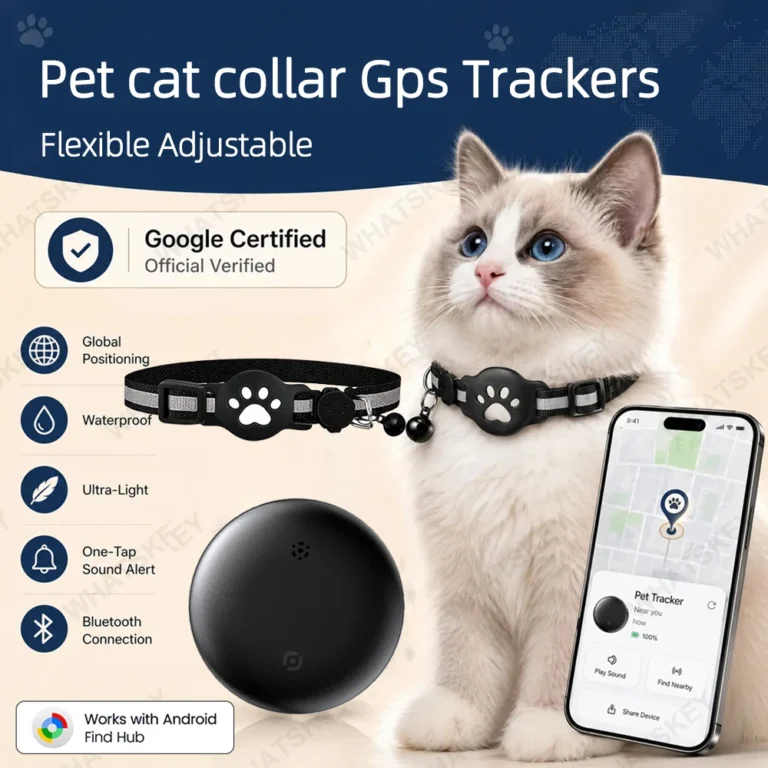
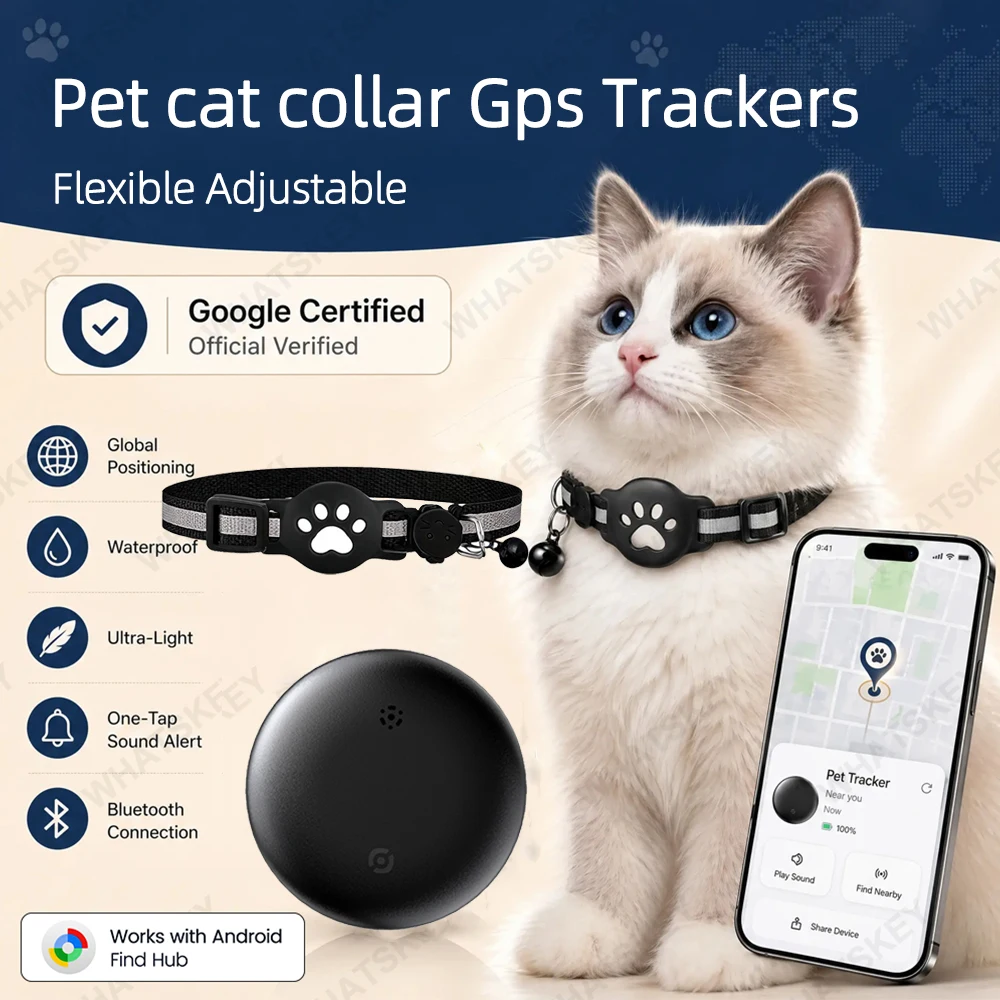
The choice follows from where you walk and what you are afraid of. If your worry is a dog who slips a collar in a town, a Bluetooth tag on the collar is cheap, lasts a year and will very likely find them, because towns are full of phones. If your worry is a sighthound that bolts across open country, that tag will show you a field they left twenty minutes ago, and only a GPS unit gives you a moving position.
Check the subscription question before buying a GPS tracker. It is the cost listings are quietest about, and a cheap unit with an expensive mandatory plan is not a cheap unit.
Android owners were locked out of this for years because the crowd-sourced networks were Apple’s. Google’s Find My Device network now does the same job across Android phones, so check which network a tag uses before buying — a tag on the wrong network is inert.
What No Tracker Does
This is the part worth saying plainly, because it is the part that gets people’s dogs lost permanently.
- A tracker is not a microchip. In the UK microchipping is a legal requirement, and the chip is what a vet or a warden scans when a stranger hands your dog in. A tracker on a collar comes off with the collar
- Keep the chip database current. A chip registered to a phone number you had three houses ago is worth nothing, and this is by far the most common reason a chipped dog is not reunited
- A tracker is not a recall. It tells you where the dog went, not how to get them back, and a dog running toward a road cannot be stopped by an app
- A tag is not a substitute for an ID tag. Most jurisdictions require a physical tag with your details on a collar in public. A stranger who finds your dog can read a tag; they cannot read your app
Being Seen in the Dark
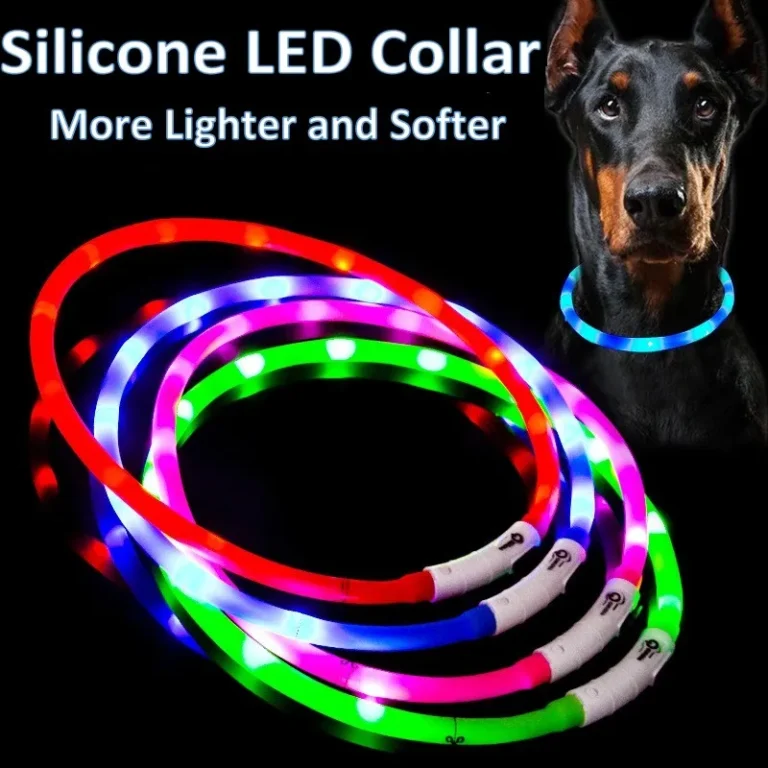
Half the dog-walking year happens in the dark, and this is the cheapest genuine safety upgrade on the whole site. What matters is not brightness but shape and movement: a driver processes a moving outline far faster than a single point of light, which they may read as a distant streetlight.
- A lit collar outlines the dog; a clip-on pendant marks a point. The pendant is better than nothing and transfers between collars, but on a large dog the outline wins
- Flashing beats steady near traffic. Steady light reads as scenery; flashing reads as a warning
- Reflective is not enough on its own — it only works when headlights hit it directly, which excludes side roads and unlit paths
- Light yourself too. Drivers slow for people, and a lit dog attached to an invisible person is a confusing thing to come around a bend
- Wear a light-up collar alongside the everyday collar, not instead of it. They are not built to take a lead, and your ID tag belongs on the normal collar
Charge it. A rechargeable collar gives a few hours of flashing per charge, which sounds ample until December, when you use it twice a day and discover it died halfway through the second walk.
Training Electronics, and Where We Stand
This is the category with the most marketing and the least evidence, so it is worth being direct.
Static and shock collars
We do not list them. They are banned in Wales, banned in several European countries, and restricted or under review elsewhere. Beyond the law, the research is not on their side: studies comparing e-collar training with reward-based methods have found no advantage in outcome and more stress-related behaviour in the dogs trained with them. Major veterinary and behaviour bodies advise against them.
The practical problem is timing. Punishment only teaches anything if it lands within a second or two of the behaviour and the dog connects the two. Most owners cannot do that reliably, so what the dog often learns is that unpleasant things happen unpredictably — sometimes in the presence of whatever they were looking at, which is how a recall problem becomes a reactivity problem.
Tone and vibration collars
A remote collar limited to a tone or a vibration is a different tool: it is an attention signal at distance, not a punishment. Used properly it means “look at me”, and it works because you spent a fortnight at close range teaching that the buzz predicts food. A no-shock collar used that way is genuinely useful on a beach or a large field. Used cold at 300 metres on a dog who has never been taught what it means, it teaches nothing at all.
Ultrasonic deterrents
These emit a tone above human hearing that most dogs find unpleasant. The honest position is that evidence is thin and results vary a lot between dogs — some stop instantly, some are entirely unbothered. They interrupt behaviour; they do not teach an alternative, and a dog that is barking from fear or separation distress is being made more anxious, not less.
If you try one, a handheld unit is preferable to an automatic collar for one reason: you decide when it fires. An automatic bark collar also fires when the dog is barking at an intruder, at pain, or at being left alone for six hours, and it will punish all three identically.
Before any of it, the cheapest tool on this page is a whistle. It never varies with your mood, it carries into wind, and a conditioned whistle recall outperforms every electronic device sold for the purpose.
Fountains and Automatic Feeders
Water fountains sell on the claim that circulating water encourages drinking. That is better established in cats than dogs, but some dogs clearly prefer moving water, and for a dog who drinks too little it is worth trying. The real reasons to own one are more mundane: a large reservoir for a hot day, and filtered water that stays fresher than a bowl standing since breakfast.
- Filters are a running cost — every four to six weeks, and a fountain run on an exhausted filter is worse than a bowl
- Clean the pump itself monthly. Biofilm builds inside the housing where you cannot see it, and that is what makes a fountain smell
- Pump noise decides whether it gets used. A fountain running dry rattles, and some dogs will not go near it again
- Keep a normal bowl as well, always. Pumps fail, and a dog with no water because a pump failed while you were at work is the failure mode that matters
Automatic feeders are genuinely useful for a dog on several small meals a day, and they have one predictable failure: jamming with the wrong kibble size or shape, usually large or oddly shaped pieces bridging the outlet. Test yours with your actual food for a week while you are home before you rely on it, and pick one with a battery backup so a power cut does not mean a missed meal.
Neither device covers a whole weekend away. A feeder does not notice a dog that is unwell, and a fountain does not notice a dog that has knocked it over.
Reading a Listing Honestly
Marketplace listings for tech are written to be searched, not read. A few phrases reliably mean less than they suggest:
| What it says | What to check |
|---|---|
| “GPS tracker” | Whether it has a SIM at all. Many are Bluetooth tags using the word |
| “No monthly fee” | True of Bluetooth tags; on a real GPS unit, find the plan before buying |
| “Waterproof” | An IP rating. IPX4 is splash resistance; IP67 survives a swim |
| “Long battery life” | Hours, in the mode you will actually use. Live tracking drains far faster than standby |
| “Works with Apple Find My” | Whether it is certified or merely compatible-ish, and what happens on Android |
| “Humane” on a training device | What it actually emits. The word is unregulated |
And the general rule for anything electronic that a dog wears: it will get wet, it will be scratched along a fence, and it will be charged less often than you intend. Buy for that, not for the photograph.
The Short Version
- Bluetooth tags show where the dog was; GPS trackers show where the dog is. Pick by where you walk
- Find the subscription cost of a GPS unit before you buy it
- Check which network a tag uses — an Apple-network tag is inert to an Android phone
- No tracker replaces a microchip with current contact details, or a physical ID tag
- A lit collar outlines the dog; a pendant marks a point. Flashing beats steady near roads
- We do not list shock collars. The evidence does not support them and they are banned in parts of the UK and Europe
- Tone and vibration collars work only if you taught the cue at close range first
- Ultrasonic deterrents interrupt; they do not teach, and they make fear-based barking worse
- A conditioned whistle beats every electronic recall device sold
- Keep an ordinary water bowl alongside any fountain
Browse the trackers, lights and training kit we list: Smart Accessories.
This is general guidance, not veterinary or legal advice. Check the rules where you live before buying any training device, and speak to a vet or a qualified behaviourist about barking, reactivity or separation-related behaviour rather than treating it with a gadget.