
A dog that inhales its dinner in nine seconds swallows a great deal of air with it. In most dogs that means discomfort, wind and the occasional regurgitated meal on the carpet. In a deep-chested dog — a boxer, a setter, a great dane, a standard poodle — it is one of the ingredients in bloat, which is an emergency that kills dogs the same day. That is the reason slow feeding is worth doing, and it is a better reason than the one on the packaging.
There are four different ways to slow a dog down, and they are not interchangeable. Three of them are on this site several times over, so here is what actually separates them.
The four mechanisms
1. The ridged bowl
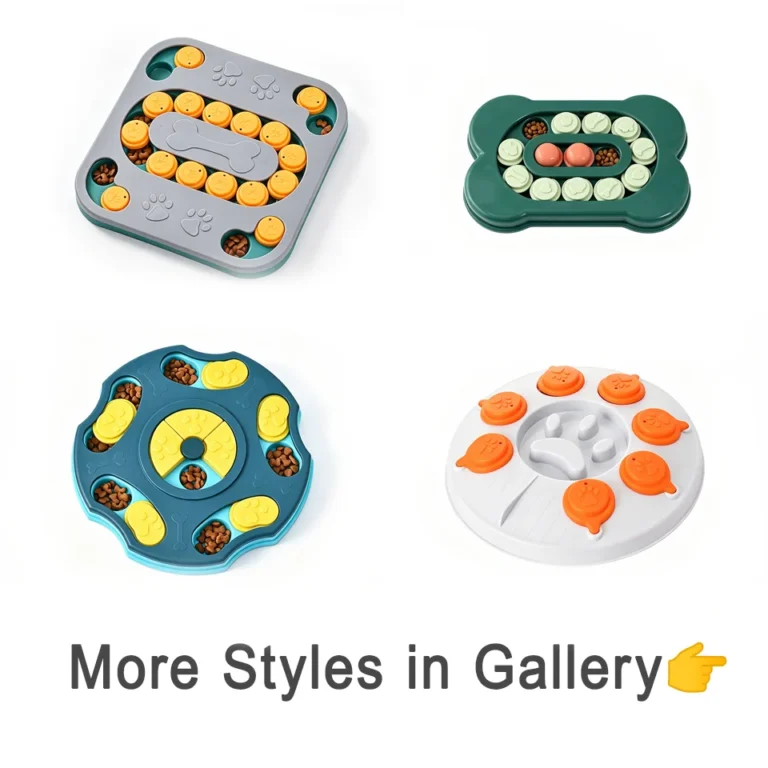
A dish with a moulded maze in the bottom. The dog has to work its tongue around the ridges instead of taking whole mouthfuls, and a meal that took nine seconds takes two or three minutes. Cheap, dishwasher-safe, and the one that suits dry food best. It is also the one that gets bought most often and thought about least.
2. The lick mat
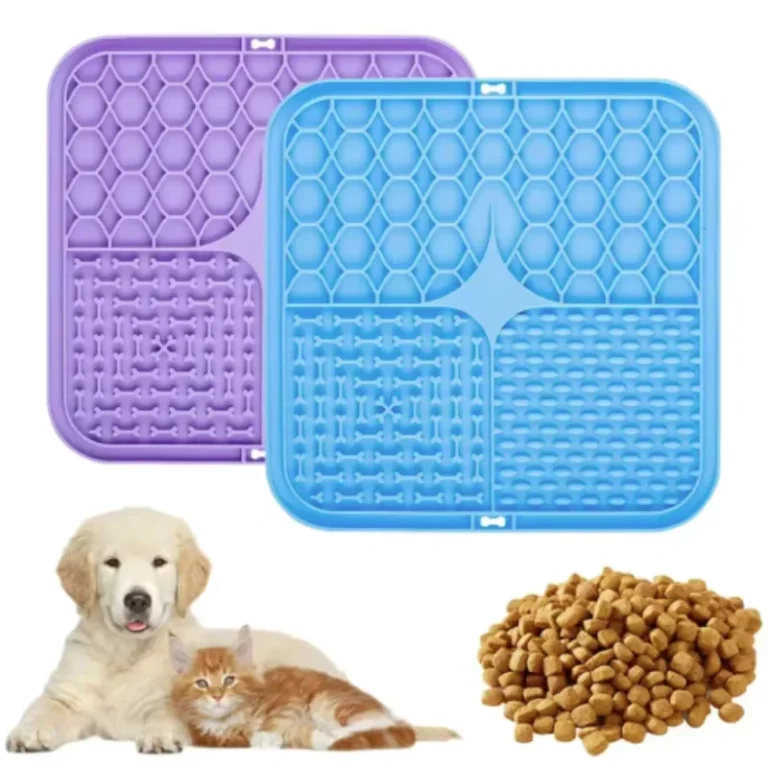
A flat silicone sheet with a textured surface. You spread something soft across it — wet food, plain yoghurt, pumpkin — and the dog licks rather than chews. It is not really a bowl; it is a way of making a small amount of food last ten minutes, and the licking itself settles a lot of dogs. Useless for dry kibble.
3. The snuffle mat
A cloth mat full of fabric strips with food hidden in it. The dog has to find each piece by nose. This is the only one of the four that tires a dog out, because scenting is real work — ten minutes of snuffling settles a bored dog better than a walk around the block. It also takes the longest to fill and cannot go in a dishwasher.
4. The treat ball
A hollow ball that drops a few pieces at a time as the dog rolls it. It turns dinner into a chase, and for a dog that is under-occupied rather than greedy it is the most fun of the four. It is also the noisiest thing you will ever own on a hard floor at six in the morning.
What is on this site
| Price | Feeds | Slows a meal to | The catch | |
|---|---|---|---|---|
| Anti-Choking Slow Feeder Dish | $2.96 | Dry food | 2–3 minutes | Light enough to be pushed around |
| Non-Slip Anti-Gulping Slow Feeder Dish | $3.74 | Dry food | 2–3 minutes | Non-slip base is the only real difference |
| Puzzle Slow Feeder Bowl for Dogs | $4.29 | Dry food | 2–3 minutes | Same idea, deeper maze |
| Non-Slip Slow Feeder with Licking Surface | $5.29 | Dry or wet | 3–5 minutes | Licking surface makes it harder to clean |
| Bone-Shaped Slow Licking Bowl for Wet Food | $6.55 | Wet food | 5–10 minutes | Wrong shape for kibble |
| Silicone Lick Mat with Suction Base | $2.73 | Soft food only | 5–10 minutes | Suction fails on textured walls |
| Lick Mat for Dogs with Suction Base | $4.55 | Soft food only | 5–10 minutes | Same, larger |
| Snail Snuffle Puzzle Mat for Dogs | $2.89 | Dry food, treats | 10–20 minutes | Hand wash, dries slowly |
| Foraging Snuffle Mat for Slow Feeding | $10.69 | Dry food, treats | 10–20 minutes | The most work to load |
| Treat-Dispensing Puzzle Ball | $1.44 | Dry food, treats | 5–15 minutes | Loud on hard floors |
| IQ Treat Ball for Feeding Meals Slowly | $3.95 | Dry food, treats | 5–15 minutes | Adjustable difficulty, fiddly to open |
Prices were read from the seller on the day this was written and they move; every product page carries its own figure with the date attached.
An honest note about the bowls
The first three rows of that table are, for practical purposes, the same object. Different moulded patterns, near-identical prices, identical results. Do not spend twenty minutes deciding between mazes. The only two things that matter on a ridged bowl are whether the base actually grips the floor — a determined dog will otherwise push it around the kitchen until the food falls out — and whether it is one moulded piece rather than an insert that traps food underneath.
We could have written three enthusiastic and slightly different paragraphs about them. They are the same bowl. Buy whichever is cheapest on the day.
Which one suits your dog
- Dry food, ordinary greedy dog: a ridged bowl. Cheapest thing that works, and it goes in the dishwasher.
- Wet or raw food: a lick mat or a licking bowl. A maze bowl full of wet food is a bowl you will be scrubbing with a brush.
- A flat-faced dog — pug, bulldog, shih tzu, boxer: shallow only. Deep ridges are hard for a short muzzle to reach into, and a dog that cannot reach its dinner either gives up or gets frustrated. A lick mat or a shallow tray beats a deep maze every time.
- A bored dog rather than a greedy one: a snuffle mat. It is the only one that does anything for the mind, and it is the one to reach for when the problem is a dog with nothing to do at four in the afternoon.
- A puppy: start with something easy. Making dinner a puzzle a puppy cannot solve teaches it to give up rather than to work.
What none of them do
- They do not control portions. A slow feeder full of too much food is still too much food, delivered slowly.
- They do not fix competition. A dog that bolts food because another dog might take it needs feeding somewhere else, not a different bowl.
- They do not prevent bloat. Slowing a meal removes one risk factor. It does not remove the risk, and it is no reason to skip the vet if a deep-chested dog is unsettled, retching without producing anything, or swelling behind the ribs.
- They do not stay clean by themselves. Every one of these is harder to wash than a plain bowl. That is the actual cost, and it is paid daily.
If gulping is the thing you came here to solve, the fuller answer — including how to tell greed from anxiety, and what bloat actually looks like — is in the article on dogs that eat too fast. For portions, ingredients and what is never safe, the feeding guide covers it properly.