

Beds & Comfort
Most dogs sleep between twelve and fourteen hours a day, so the bed matters more than the toy box. The first question is not price but shape, and the answer is written in how your dog already sleeps.
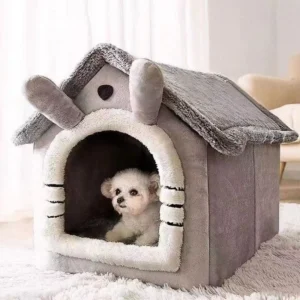
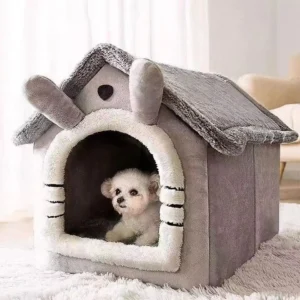
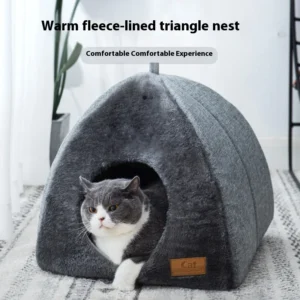
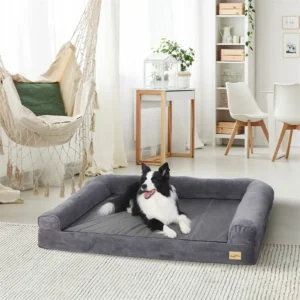
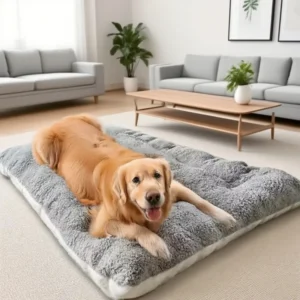
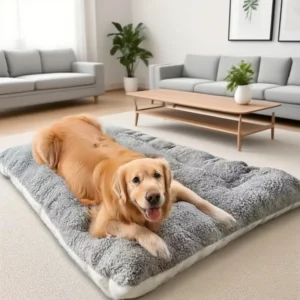
Dogs that curl tightly want raised sides to rest a head against — a donut or bolster bed. Dogs that sprawl flat out find a rim annoying and do better on a plain rectangular mat, which also drops neatly into a crate where a round bed never fits properly. Dogs that burrow want something they can get under or inside, which is where covered beds, tents and enclosed nests earn their place.
Sizing is where people go wrong. Measure your dog curled up, nose to tail, then add roughly 15cm. A bed that is too small is the single most common reason a dog refuses to use one. Check the internal dimensions rather than the external size, since thick walls can swallow a surprising amount of the footprint.
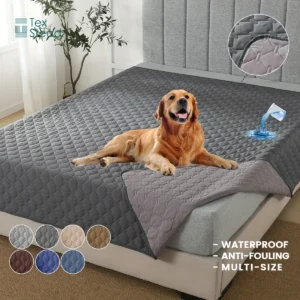
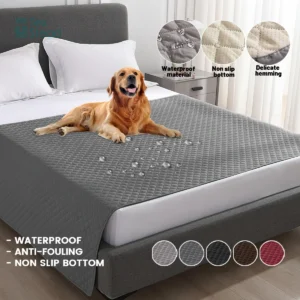
Older dogs need support, not softness. Loose polyester fill flattens under a heavy dog within months and leaves an arthritic dog effectively lying on the floor — a foam base holds its shape and keeps pressure off hips and elbows. If your dog has accidents, or comes in wet, a waterproof layer between dog and padding is what stops a good bed being ruined, because liquid that soaks into stuffing never fully dries.
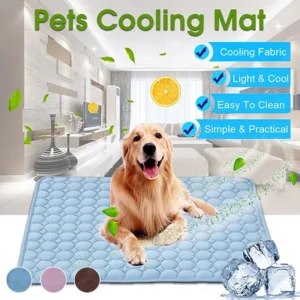
Finally, think in seasons. Thick plush and enclosed beds trap heat, which is welcome in January and miserable in July. Cooling mats, breathable ice silk and airflow-based woven mats exist for the other half of the year. The full guide covers sizing a bed for a dog lying stretched out, testing whether “orthopaedic” foam really supports, and which cooling products work and for how long: Choosing a Dog Bed: Size, Support, Heat and Keeping It Clean.
Searches Beds & Comfort only — 40 products.
Showing 1–12 of 40 results