
Small dogs have a reputation for being hard to house train, and in surveys of owners small dogs are reported to soil indoors more often than large ones. The usual reason is not stubbornness. A small puppy has a small bladder, it fills quickly, and a puddle the size of a coaster is easy to miss or to forgive. Accidents that nobody notices are accidents the puppy practises. The fix is not a cleverer method. It is a tighter schedule, kept up for longer than feels necessary.
How long a puppy can actually wait
A common rule of thumb, used in Ohio State University’s house-training advice, is roughly one hour for each month of age, give or take an hour: a three-month-old might manage three to four hours. Treat that as the most a puppy can manage at rest, not a timetable. Small breeds usually need to go more often, and play, a meal or waking up all cut it short.
The times that matter
Take the puppy out, to the same spot, at each of these:
- The moment it wakes up, from the night or from a nap. Carry a very small puppy there; it may not make it on foot.
- Within about fifteen minutes of eating or drinking a lot.
- During and after play, which speeds everything up.
- Last thing at night, and once in the night for a young puppy.
- Any time it starts sniffing the floor, circling, or wandering off towards a corner.
- And on top of all that, every hour or two while it is awake, at first.
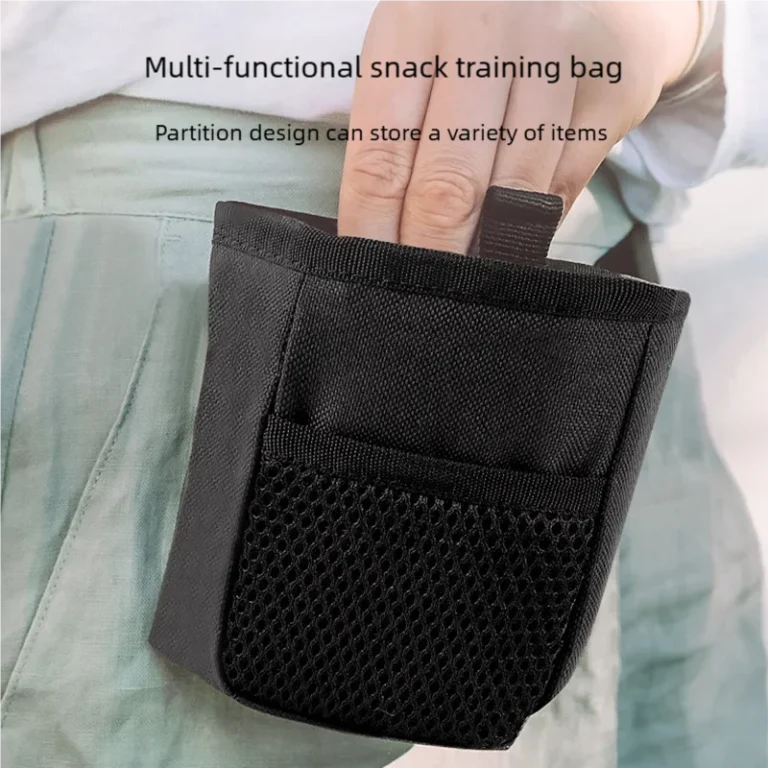
Stay with the puppy, stay quiet and boring, and wait. When it goes, praise it and give a small treat right there, within a second or two, not when you are back inside. A treat pouch on your belt makes that easy. If nothing happens in five minutes, go back in, keep the puppy close or in its pen, and try again in ten.
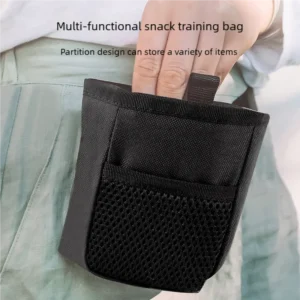
Keeps the treat within a second of the puppy going, not back indoors.
$2.62
Check Price on AliExpressBetween trips: supervision or a small space
House training is mostly about preventing mistakes, because every one that happens unseen is practice in the wrong place. When you cannot watch the puppy, it should be in a puppy pen or a crate it is happy in, sized so there is room to sleep and turn round but not a far corner to use as a toilet. When you can watch, really watch: a puppy loose in the house while you cook is a puppy that will find the rug.
Pads, grass mats and balconies
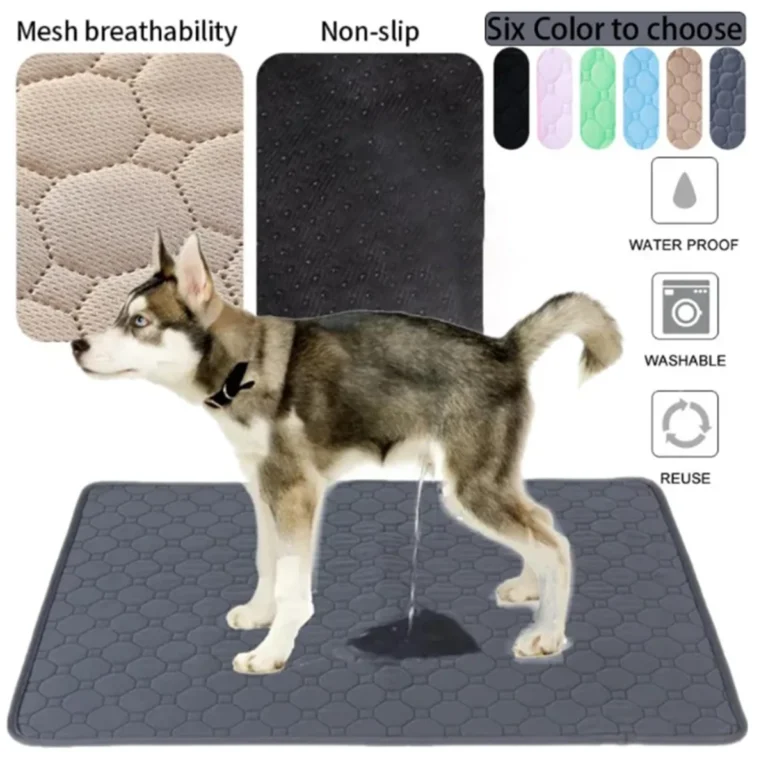
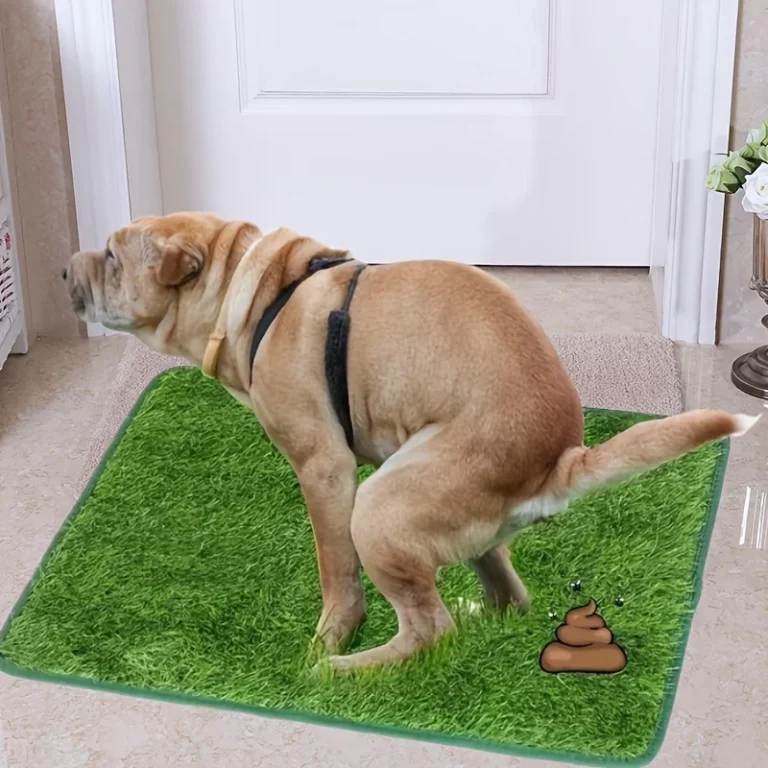
Many owners of small dogs, especially in flats, want an indoor option, and that is a reasonable choice as long as it is a deliberate one. A washable training pad or an artificial grass toilet mat in one fixed place works well. What does not work is pads all over the house: the puppy learns that soft things on the floor are toilets, and rugs and bath mats are soft things on the floor.
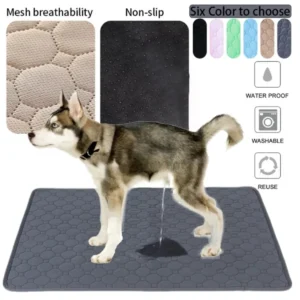
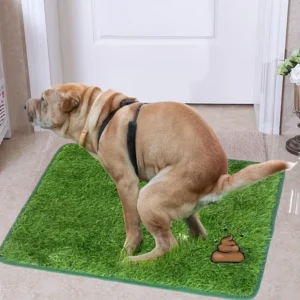
On Amazon: a large washable, waterproof underpad, about 86 by 91 cm, sold for pets as well as people. Use one in a single fixed spot, as above, not several round the house; it goes in the wash and back down. A puppy that chews it should not be left alone with it.
As an Amazon Associate I earn from qualifying purchases.
If the plan is eventually outdoors only, move the pad gradually towards the door, then take the puppy out at the times it would have used it. Expect a few setbacks while it works out that the rules have changed.
When there is an accident
- If you catch it happening, interrupt calmly, without shouting, scoop the puppy up and take it to the right spot. If it finishes there, praise it.
- If you find it afterwards, say nothing to the puppy. It cannot link a telling-off to something it did ten minutes ago; it only learns to hide from you when it needs to go, which makes training slower.
- Clean it properly. An enzyme cleaner made for pet urine breaks the smell down. Ordinary cleaners can leave enough scent for the puppy to come back to the same spot.
- Ask what went wrong. Almost always it is time since the last trip, a missed signal, or too much freedom too soon. Tighten that, not the puppy.
On Amazon: an enzymatic stain and odour remover made for dog accidents, the kind of cleaner described above. Soak the spot rather than misting the surface, and test it on a hidden patch of carpet or fabric first. It removes the smell; it does not fix a puppy that is being given too much freedom too soon.
As an Amazon Associate I earn from qualifying purchases.
Long-coated breeds like the Shih Tzu
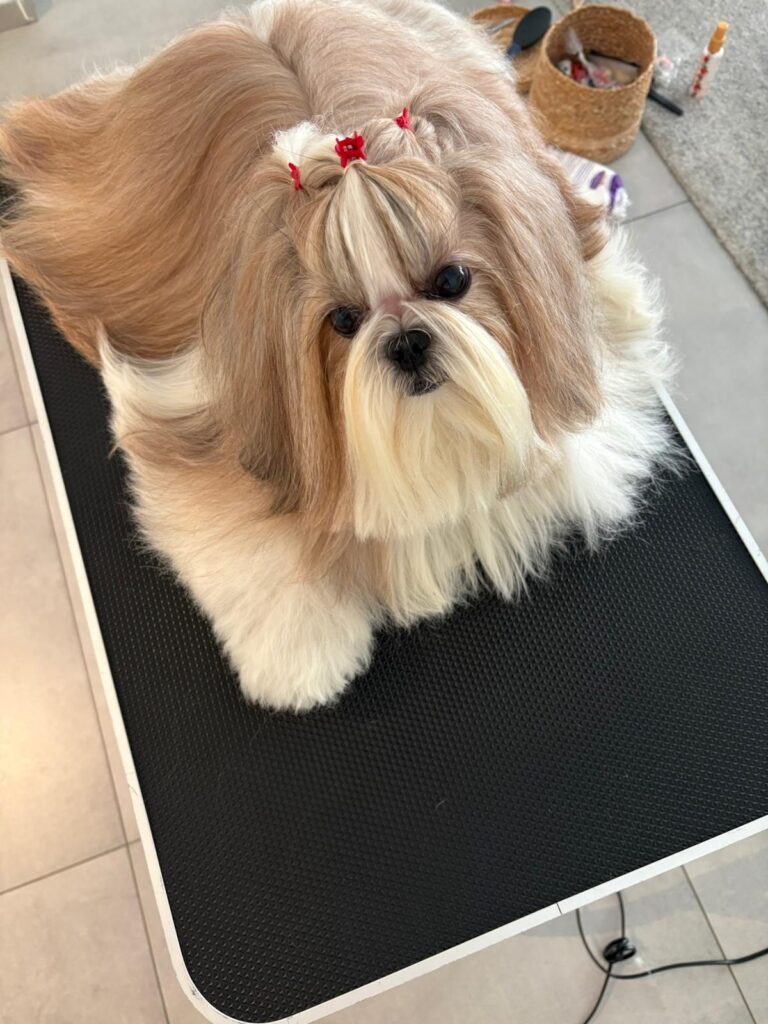
Two practical things. Keep the hair around the bottom and the inside of the back legs trimmed short, so that going to the toilet does not leave a mess the puppy then avoids squatting into, and so you can see that all is well; our home clipping guide covers how. And on wet or cold days a small dog may simply refuse to go out; a covered spot near the door, or a short walk to a sheltered corner, saves a lot of indoor accidents in winter.
When it is not a training problem
See the vet if a puppy that was getting there starts going backwards, wees very often or in small amounts, strains, has blood in the urine, or drinks much more than usual. Urinary infections are common and are not fixed by training. An adult dog that suddenly starts having accidents needs a vet check before anything else.
Most small puppies are reliable somewhere between four and six months, and some take longer. For everything else in the first months, see our puppy guide; and if accidents happen only when the dog is left alone, read our guide to dogs that cannot be left alone.