
Play is the part of dog ownership people are most confident about and most often get wrong. Not because owners are careless, but because the risks are invisible until they are not: a squeaker inside a toy, a ball that fits a little too neatly, twenty minutes of hard fetch on a growing puppy. None of it looks like a problem while it is happening.
This guide covers what to give a dog to play with, how to play, and when to stop. It is written for someone with their first puppy and for someone who has had dogs for twenty years, because the two groups tend to make different mistakes. New owners buy toys that are too small and play too long. Experienced owners get complacent about inspection and keep a favourite toy in circulation months after it should have gone in the bin.
The One Rule That Prevents Most Accidents
If a toy or any part of it can fit entirely inside your dog’s mouth, it is too small. Not “probably fine with supervision” — too small. A ball that sits neatly behind the back teeth can be inhaled when the dog takes a sudden breath, and at that point you have seconds, not minutes.
The practical test: hold the toy against the widest part of your dog’s open mouth. If it disappears behind the canines, it is the wrong size. Buy the next size up, and buy it for the largest dog in the house rather than the smallest — a labrador will happily swallow a toy bought for a terrier, and the two of them share a toy box.
Tennis balls deserve a specific warning. They are the wrong size for most large dogs, and the felt is abrasive enough to wear teeth down measurably over years of fetching. Purpose-made rubber balls in a larger diameter solve both problems.
Toy Types: What Each One Is For
| Type | What it is good for | How it fails | Supervision |
|---|---|---|---|
| Plush and soft toys | Carrying, shaking, comfort; light on the neck | Seams open, stuffing and squeakers come out | Supervise; bin at first tear |
| Rubber chew toys | Solo chewing, jaw exercise, treat stuffing | Chunks torn off by determined chewers | Check monthly for missing pieces |
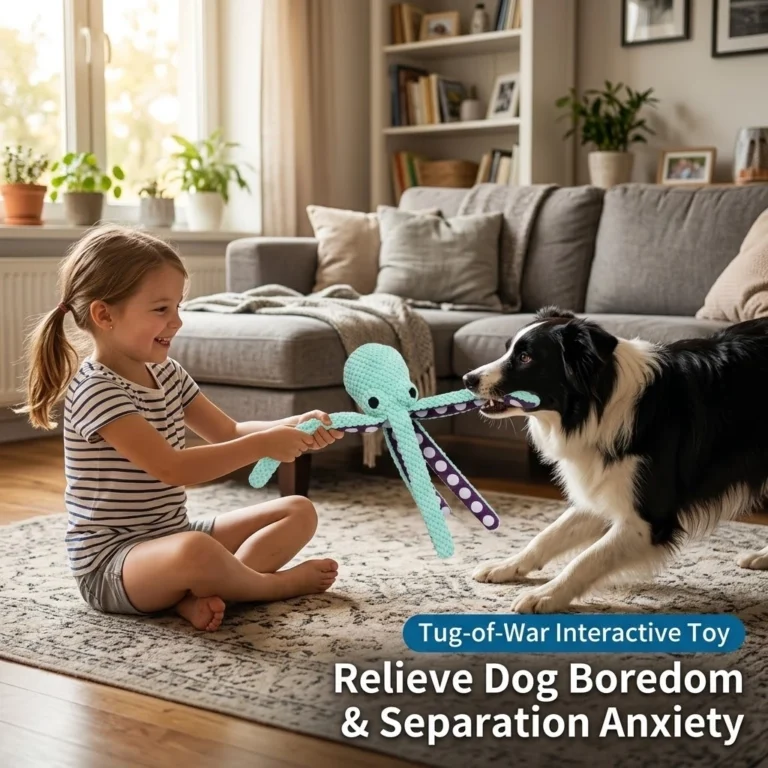
| Rope and tug toys | Interactive play, teeth cleaning at the fringes | Fibres swallowed; strands cause gut blockages | Supervise always; never leave down |
| Balls | Chase, fetch, solo play | Wrong size lodges in the throat; felt abrades teeth | Size-check before first use |
| Puzzle and treat toys | Mental work, slowing fast eaters | Parts chewed off; frustration if too hard | Start easy, supervise early sessions |
| Snuffle mats | Nose work; tires dogs quickly | Fabric strips pulled out and eaten | Supervise fabric chewers |
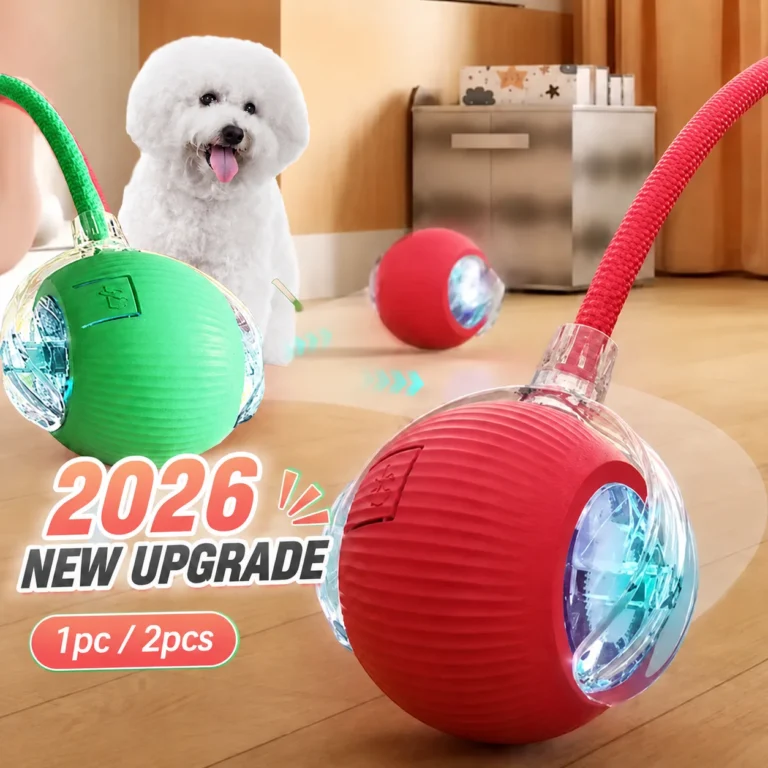
| Motorised and electronic toys | Solo play when nobody is free | Battery compartments breached | Supervised play only, never left out |
The pattern across every row: the toy is fine until it starts coming apart, and the moment it starts coming apart is the moment it becomes dangerous. There is no toy on the market that a determined dog cannot eventually destroy, and “indestructible” on a label means the manufacturer has not met your dog.
Tug: The Game With the Worst Reputation
Tug is widely believed to make dogs aggressive or dominant. It does not. That idea comes from dominance theory, which has been abandoned by behaviour researchers for decades, and studies looking at tug play have found no link to aggression towards people. What they have found is that dogs who play tug with their owners score higher on measures of confidence and engagement.
What tug does require is rules, because it is a high-arousal game and arousal is where accidents happen.
- Let them win, often — a dog who never wins stops playing. Winning does not make a dog think it outranks you
- Teach a release before you need one — trade for a treat, mark the moment the mouth opens, hand the toy straight back. The game restarting is the reward
- Pull horizontally, never up — lifting a dog off the ground by a toy puts the whole body weight through the neck and jaw
- Let the dog do the pulling — you hold, they tug. Yanking against a braced dog is how teeth get damaged
- Stop on your terms, while they still want more
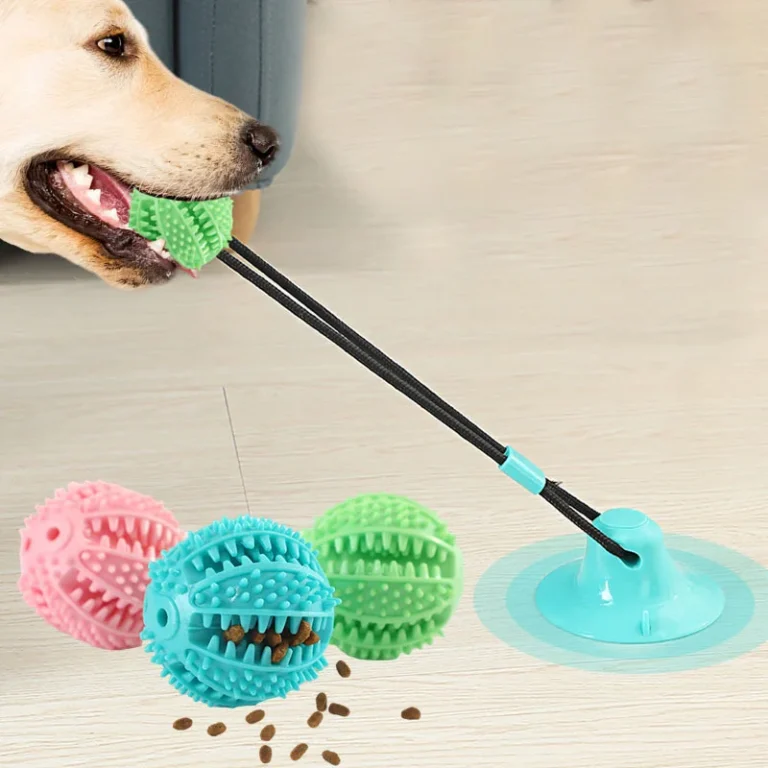
The lift rule matters most for small dogs, where an owner can pick one up on a rope without meaning to, and for puppies, whose adult teeth are still setting into the jaw. If you want a game a dog can play against something other than you, a tug toy that anchors to the floor takes your arm out of the equation entirely.
Fetch, and the Part Nobody Mentions
Fetch is the most convenient way to tire a dog and the hardest on their body. The damage is not the running — it is the stopping. A dog sprinting after a ball decelerates hard, often twisting, landing repeatedly on the same forelimb. Do that a hundred times an evening, several evenings a week, for years, and you are loading joints in a way that ordinary running does not.
This is not an argument against fetch. It is an argument against unlimited fetch, and specifically against these:
- Puppies with open growth plates — roughly under twelve months in small breeds and up to eighteen to twenty-four months in giant ones
- Dogs with existing hip, elbow or cruciate problems, where the twist on landing is the specific risk
- Long unbroken sessions — a tired dog lands worse than a fresh one, and injuries happen at the end
- Throwing on slippery floors, hard tarmac or downhill
If your dog’s idea of a good evening is two hours of fetch, cut the throws and add nose work instead. It tires them more, not less.
Why Sniffing Beats Running
Scent work is genuinely exhausting for a dog in a way that distance is not. A dog’s olfactory processing takes real cognitive effort, and ten minutes of searching settles most dogs better than an extra half hour round the block. This is the single most useful thing in this guide for anyone with a high-energy dog, a rainy week, or a dog on crate rest after an injury.
The cheapest version costs nothing: scatter their dinner in the garden or across a towel and let them find it. A snuffle mat does the same job indoors and washes, and a rolled spiral version is harder and fits in a crate. Take the food out of the daily ration rather than adding it on top.
Start easy. Food sitting visibly on the surface for the first few attempts, buried deeper once they understand the game. A puzzle that pays out nothing in the first two minutes gets abandoned, and dogs rarely give an abandoned puzzle a second chance.
How Long a Session Should Last
Short and frequent beats long and occasional, at every age. Stopping while the dog still wants more is what keeps them enthusiastic about the game; playing until they lose interest teaches them the game gets boring.
| Age | Active play per session | Sessions per day | What limits it |
|---|---|---|---|
| Puppy, 8 to 16 weeks | 5 to 10 minutes | 3 to 5 | Concentration and soft joints, not stamina |
| Puppy, 4 to 12 months | 10 to 15 minutes | 2 to 4 | Growth plates still open |
| Healthy adult, small breed | 10 to 20 minutes | 2 to 3 | Tires faster than the enthusiasm suggests |
| Healthy adult, large breed | 15 to 30 minutes | 2 to 3 | Joint loading on repetitive chase |
| Flat-faced breeds, any age | 5 to 10 minutes | Several, in cool conditions | Breathing and overheating, not muscle |
| Senior or arthritic | 5 to 15 minutes, low impact | 2 to 3 | Stiffness after, not during — watch the next morning |
The senior row is the one owners misread. An old dog will play through pain and then struggle to get up the following morning. Judge the session by how they move the next day, not by how keen they were at the time.
Flat-faced breeds need a different kind of caution. Pugs, French bulldogs, boxers and similar cannot cool themselves efficiently by panting. In warm weather a normal play session becomes a heatstroke risk, and the warning signs — heavy panting, thick drool, an unwillingness to move — arrive later than you would like.
Inspecting Toys, and Knowing When to Bin One
Most toy injuries come from a toy the dog has owned for months. Run a hand over every toy once a week. It takes a minute and it is the single highest-return habit in this guide.
| What you find | What it means | Action |
|---|---|---|
| Open seam on a plush toy | Stuffing and squeaker now reachable | Bin it, or repair before the next session |
| Missing chunk of rubber | It has already been swallowed | Bin, and watch for vomiting or straining |
| Rope fraying into loose strands | Swallowed fibres bunch in the gut | Bin; string obstructions need surgery |
| Ball gone soft or split | Can fold and lodge in the throat | Bin immediately |
| Cracked plastic on a puzzle | Sharp edges | Bin |
| Exposed battery compartment | Chemical burn and ingestion risk | Bin, and treat any swallowed battery as an emergency |
Rope deserves its own note. A single swallowed strand can act as a linear foreign body, catching at one end while the gut keeps trying to move it along, and that causes damage a solid object would not. Rope toys are excellent supervised and a poor choice left in the toy box unattended. Buy a plain knotted rope for interactive play and put it away afterwards.
Small Dogs and Large Dogs Need Different Things
Playing with a small dog
- Weight matters more than size — a heavy toy strains a small neck during the shake that terriers do instinctively
- Never lift them by a toy, and do not let children do it either
- Watch for resource guarding — small dogs get toys taken off them more often, and learn to defend them
- Soft toys are genuinely appropriate here, where they are a shake-and-carry toy rather than something to be dismantled in four minutes
Playing with a large dog
- Buy for the jaw, not the price — cheap toys destroyed weekly cost more than one good one, and every destruction is a swallowing risk
- Skip antlers, hooves and hard nylon — a powerful jaw plus something that will not give is the classic cause of a fractured carnassial tooth. If it does not flex under your thumbnail, it is too hard
- Mind the deceleration, per the fetch section above
- Toys for a mixed household get bought for the biggest mouth
The size rule cuts both ways in a multi-dog home. A toy safe for your collie may be a choking hazard for the chihuahua who shares the house, and dogs do not check whose toy they have picked up. Size for the smallest throat and the strongest jaw at the same time, which usually means fewer toys, bought better.
If Your Dog Swallows Part of a Toy
Do not wait to see if it passes, and do not try to make the dog vomit unless a vet tells you to — bringing a sharp object back up can do more damage than it did going down.
- Ring your vet now, with the toy in front of you so you can describe what is missing and roughly how big it was
- Signs of obstruction — repeated vomiting, refusing food, straining without producing anything, a tense or painful abdomen, unusual lethargy
- String, rope fibre and batteries are emergencies regardless of how well the dog seems
- Keep the rest of the toy; it helps the vet judge size, material and whether it will show on an X-ray. Soft plastic and fabric often do not
The Short Version
- If it fits entirely in the mouth, it is too small — buy for the biggest dog in the house
- Tug is a good game with rules: let them win, pull horizontally, never lift
- Fetch damages joints through stopping, not running — cap it, especially for puppies and older dogs
- Ten minutes of sniffing tires a dog more than an extra half hour of walking
- Short frequent sessions, stopped while they still want more
- Check every toy weekly and bin anything coming apart — a favourite toy is not worth an emergency laparotomy
- Rope and squeaky toys are for supervised play, not for leaving in the toy box
Browse the toys we list, sorted by what they are actually for: Dog Toys.
This guide is general information, not veterinary advice. If your dog has a joint condition, a heart or breathing problem, or you think they have swallowed something, speak to your vet.