



The question comes up in dog groups every week: which fresh food delivery is worth it, and is real food better than kibble? The honest answer starts with the fact that “fresh” covers three quite different things, with different risks. Below, each claim is set against what the evidence actually shows.
Three different things called fresh
| Type | What it is | The main risk |
|---|---|---|
| Fresh cooked, delivered | Lightly cooked meat and vegetables, portioned for your dog, sent chilled or frozen | Cost. Usually several times the price of a good dry food. |
| Commercial raw | Frozen raw meat, bone and offal, sold as complete meals or as mince | Bacteria, for the dog and for the people in the house |
| Home-made, raw or cooked | Recipes from books, websites or friends | Missing nutrients, which show up slowly |
“Dogs on fresh food are healthier”
What the evidence shows: there is no long-term study showing that dogs fed fresh or raw food live longer or get ill less than dogs fed a complete dry food. The research that exists is short and small. It suggests fresh, lightly cooked foods are easier to digest and give smaller, firmer stools. That is real, but it is not the same as better health.
Shinier coats and more enthusiasm at mealtimes are what owners report most. Both are believable: these foods are often higher in fat and taste better to a dog. But the thing that matters most for health is the same in every bowl: is the food complete and balanced, and is the dog fed the right amount for its size?
“Raw is natural, so it is safe”
What the evidence shows: in 2018, researchers in the Netherlands tested 35 frozen raw dog and cat foods from eight brands sold in ordinary shops. They found E. coli O157 in 8 of them (23%), Listeria monocytogenes in 19 (54%) and Salmonella in 7 (20%). These are bacteria that make people seriously ill.
A dog can carry Salmonella from its food and pass it in saliva and stools while looking perfectly well. The bigger risk is often to the people in the home: babies and small children, anyone pregnant, older people and anyone with a weakened immune system. Freezing does not kill the bacteria; it only pauses them. This is why the US Food and Drug Administration and the American Veterinary Medical Association both advise against feeding raw.
If you feed raw anyway, treat it like raw chicken in your own kitchen:
- thaw it in the fridge, in a closed container, on the bottom shelf;
- use a separate board and spoon, and a stainless steel bowl that is washed in hot water after every meal (plastic scratches and holds bacteria);
- wash your hands after preparing it and after picking up the bowl;
- throw away anything not eaten within about 20 minutes;
- no licking faces, and pick up the dog’s stools promptly;
- do not feed raw in a home with a baby or someone vulnerable.

Two stainless steel bowls on a stand. Steel goes through hot water after every meal without scratching.
$8.85
Check Price on AliExpress“I can make it myself”
What the evidence shows: a 2013 study at the University of California, Davis checked 200 home-made dog food recipes from books and websites. 95% of them were short of at least one essential nutrient, and most were short of several. Missing nutrients like zinc, vitamin D or choline do not show in a week. They show months later, in skin, bones or energy.
Home cooking can work, but only from a recipe written for your dog by a veterinary nutritionist, followed exactly, usually with a supplement made for that recipe. Chicken and rice is fine for a few days on a vet’s advice. As a diet, it is not complete.
If you want a fresh food delivery: what to check
This is the part the group question was asking. There are many services: The Farmer’s Dog and others in the US, Butternut Box and others in the UK. We have not tested any of them, so rather than recommending one, here is how to judge any of them:
- It says complete and balanced. In the US, an AAFCO statement for adult maintenance or all life stages; in the UK and Europe, the word “complete”. Without it, it is a topper, not a diet.
- A qualified nutritionist formulates it. Look for a board-certified veterinary nutritionist, or a PhD in animal nutrition, named on the site. “Vet approved” alone means little.
- The food is cooked, not raw, unless you have read the section above and accept the risk.
- Portions are set by your dog’s weight and activity, and you weigh the dog after a month to check. Small dogs gain weight easily on rich food.
- You have freezer space and the cost works every month, not just with the first-box discount.
- You switch over a week, mixing it with the old food. Our guide to sensitive stomachs has the day-by-day plan.
The middle way most dogs are happy with
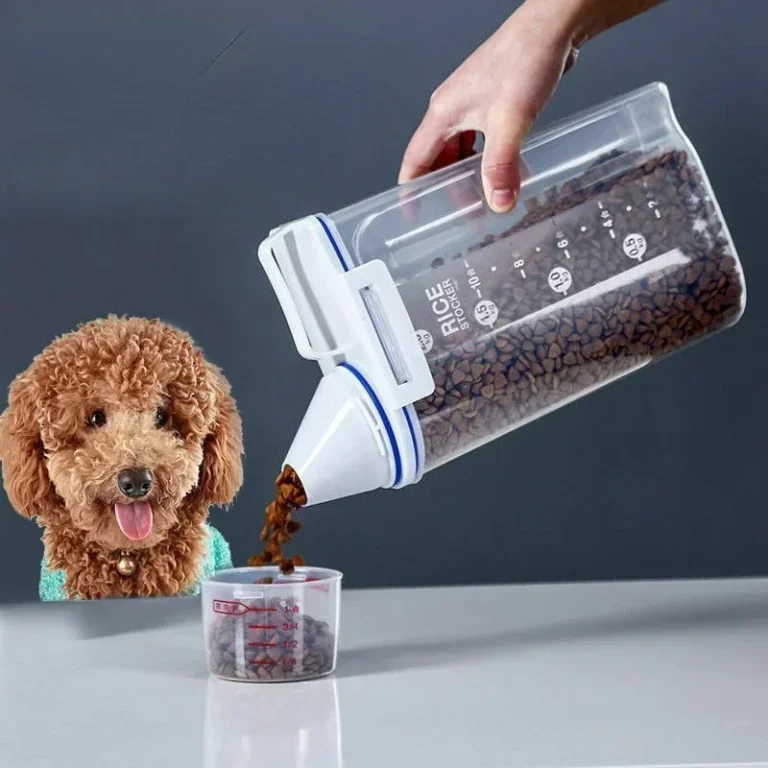
If what you want is more variety and interest at mealtimes, you do not need to change the whole diet. A spoonful of plain cooked chicken, white fish or vegetables on top of a complete food, up to about a tenth of the day’s calories, does that safely. Cut the dry food back a little to make room for it, which is easiest with a scoop that weighs. Our guide to what dogs can and cannot eat lists the safe foods and the ones never to add.
What is in Bell’s bowl
Bell eats a dry small-breed food, Farmina N&D Ocean Adult Mini, and drinks lukewarm tap water. That is not a verdict on anyone else’s bowl. It is a reminder that a good, complete dry food fed in the right amount is a perfectly sound way to feed a small dog, and that fresh food is a choice, not a correction.
Sources: van Bree and colleagues, Veterinary Record, 2018 (bacteria in 35 commercial raw foods); Stockman and colleagues, Journal of the American Veterinary Medical Association, 2013 (200 home-made recipes); US Food and Drug Administration guidance on raw pet food. This guide is general information; if your dog has a health condition, ask your vet before changing its food.