

Soft stools that come and go, a gurgling tummy at night, the odd bout of sick on the kitchen floor, wind that clears a room: owners of small dogs often describe their dog as having “a sensitive stomach”. Sometimes that is exactly what it is, and a calmer, more consistent diet sorts it out. Sometimes it is a sign of something a vet needs to find. This guide covers both: what usually helps, how to change food without making things worse, and the signs that mean you should stop experimenting and book an appointment.
First: is this a vet visit, not a food change?
Small dogs dehydrate quickly, so do not try a new food first if you see any of these. Ring your vet:
- Blood in the vomit or stool, or black, tarry stools.
- Repeated vomiting in a day, or vomiting and diarrhoea together.
- A puppy, an older dog, or a dog with another illness that has diarrhoea.
- Lethargy, a painful or swollen belly, refusing food for more than a day, or not drinking.
- Something eaten that might be toxic or might not pass: chocolate, grapes, xylitol, a sock, a corn cob, bones. Our list of dangerous foods has the common ones.
- Weight loss, or loose stools that have gone on for more than two or three weeks.
If none of those apply, and your dog is bright, eating and drinking, the everyday causes below are the place to start.
The everyday causes
| Cause | Clue | What helps |
|---|---|---|
| A sudden change of food | Trouble started within a few days of a new bag or brand | Go back, then switch slowly (below) |
| Treats and table scraps | Worse after visitors, holidays or training days | Treats under a tenth of the day’s food; no fatty scraps |
| Rich, fatty food | Upset after roast dinners, sausages, cheese | Keep fat out of the bowl; very fatty food can trigger pancreatitis |
| Eating too fast | Food comes back up whole, soon after meals | Smaller meals and a slow feeder |
| Scavenging on walks | Random bad days, often after the park | Watch closely; a “leave it” cue helps |
| One big meal a day | Sick on an empty stomach, often yellow, early morning | Two or three smaller meals; mention it to your vet |
Our guide to a dog that eats too fast covers gulping and slow feeders in detail.
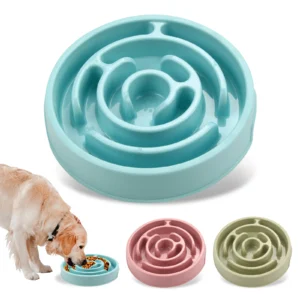
A non-slip slow feeder: slows a gulper down, which helps when food comes straight back up.
$3.55
Check Price on AliExpressHow to change food without upsetting the stomach
Even a better food causes trouble if it arrives all at once. Mix it in over about a week, longer for a dog that is already sensitive:
| Days | Old food | New food |
|---|---|---|
| 1 to 2 | 75% | 25% |
| 3 to 4 | 50% | 50% |
| 5 to 6 | 25% | 75% |
| 7 onwards | 0% | 100% |
If stools soften, stay at that step for a few more days before moving on. Change one thing at a time: a new food and new treats in the same week leave you guessing which one caused the problem.
What to look for in a food for a sensitive stomach
- A complete food for small adult dogs, from a maker that can tell you who formulates it. Small kibble suits small mouths and slows eating a little.
- A short ingredient list with one main animal protein you can name, such as fish, lamb or turkey. It makes it easier to see what your dog tolerates, and to avoid it later if needed.
- Moderate fat. Rich foods and fatty treats are a common trigger.
- Consistency. The same food, the same amount, at the same times. Rotating flavours every bag is a regular cause of loose stools in small dogs.
“Grain-free” is not the same as “easy to digest”, and many dogs do well on foods with oats or rice. Foods labelled “sensitive” vary a great deal; the label matters less than whether your dog’s stools settle on it over three or four weeks.
What Bell eats
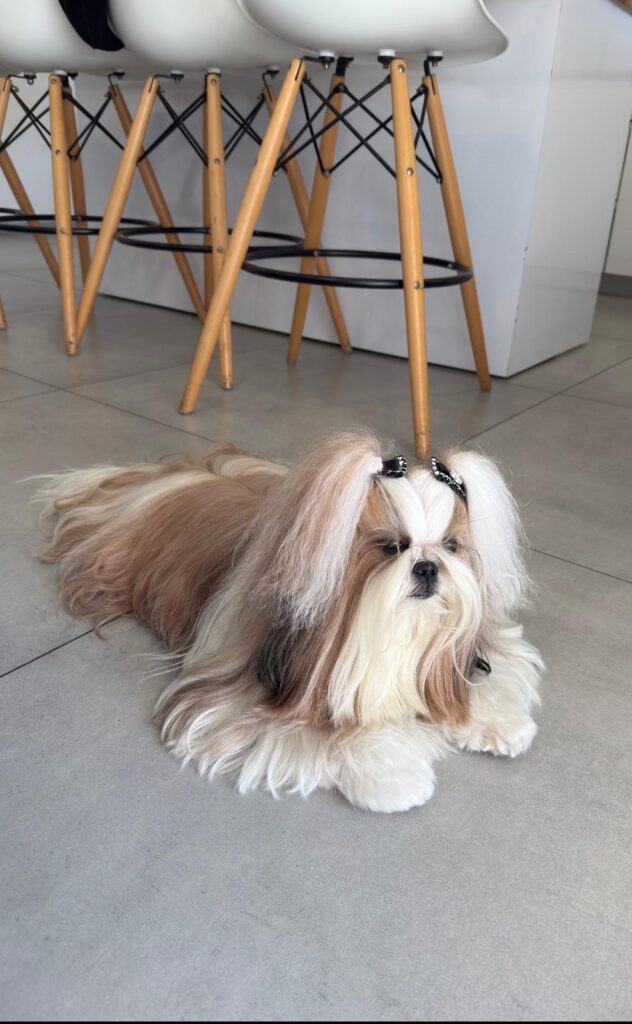
Bell, the Shih Tzu behind this site, eats a dry food made for small adult dogs: Farmina N&D Ocean, a fish-based recipe built on cod, with spelt, oats and orange. She drinks lukewarm tap water. We mention it because readers ask, not as a cure: there are plenty of good small-breed foods, and the right one is the one your own dog does well on.
When it might be an allergy or intolerance
Loose stools or vomiting together with itchy skin, ear infections or paw licking can point to a food allergy. The only reliable way to find one is an elimination diet: a vet-chosen food, often a hydrolysed or novel-protein diet, fed strictly and on its own for around eight weeks, then a careful re-test. Blood tests and hair tests sold to owners are not a reliable way to diagnose food allergy in dogs. If skin is part of the picture, our guide to dry coat and flaky skin covers the signs to mention to your vet.
Day-to-day habits that help
- Two or three meals a day rather than one big one.
- Fresh water always available. Diarrhoea costs a small dog a lot of fluid.
- Weigh or measure the food, by your dog’s weight, not by eye. Overfeeding alone softens stools. Our feeding guide covers portions.
- One kind of treat, small and plain, counted as part of the day’s food.
- Keep a simple diary for two weeks: food, treats, stools, sickness. It is the most useful thing you can take to the vet.
Ask your vet before adding probiotics, supplements or home remedies. Some help some dogs, but they can also hide a problem that needs treatment.
This is general guidance, not veterinary advice. Ongoing vomiting or diarrhoea, or any of the warning signs above, need a vet rather than a change of food.