


A small-breed puppy grows fast, has a tiny stomach and very little in reserve. That is the whole reason its food matters more than an adult dog’s. This guide follows a puppy’s first year in order: what to look for on the bag before you buy, how much and how often at each age, and when to move on to adult food.
Before you buy: three words on the bag
- “Complete”. In the UK and Europe a complete food has everything a dog needs on its own. “Complementary” means a topper or a treat, not a diet. In the US, look for the AAFCO statement saying the food is complete and balanced “for growth” or “for all life stages”.
- “Puppy” or “growth”. Puppies need more protein, fat, calcium and phosphorus than adults, in the right balance. An adult food is not a smaller version of a puppy food.
- “Small breed” or “mini”. Not essential, but useful: smaller kibble a small mouth can manage, and more energy in each gram, so the stomach does not have to hold as much.
Price and the photo on the front tell you little. A plain supermarket puppy food that says complete is a better choice than a boutique bag that does not. If you are torn between two, keep the puppy on whatever the breeder or rescue was feeding for the first couple of weeks; a new home is enough change for one stomach.
8 to 12 weeks: four small meals
Very small puppies can run out of energy fast. Their blood sugar drops if they go too long without food, get cold, or are unwell, and a toy-breed puppy can go from playing to wobbly in a few hours. So at this age: four meals a day, spread evenly, with the last one in the evening.
Know the signs of low blood sugar: a puppy that goes quiet and listless, trembles, walks unsteadily or will not eat. That is an emergency. Rub a little honey or sugar syrup on the gums and ring the vet on the way. Never let a tiny puppy skip meals because it seems full of energy.
3 to 6 months: three meals
Once the puppy eats well and is growing steadily, drop to three meals. Use the feeding table on the bag as a starting point, by the puppy’s current weight and age, and split the daily amount between the meals. The table is a guess for an average puppy; yours may need a little more or less.
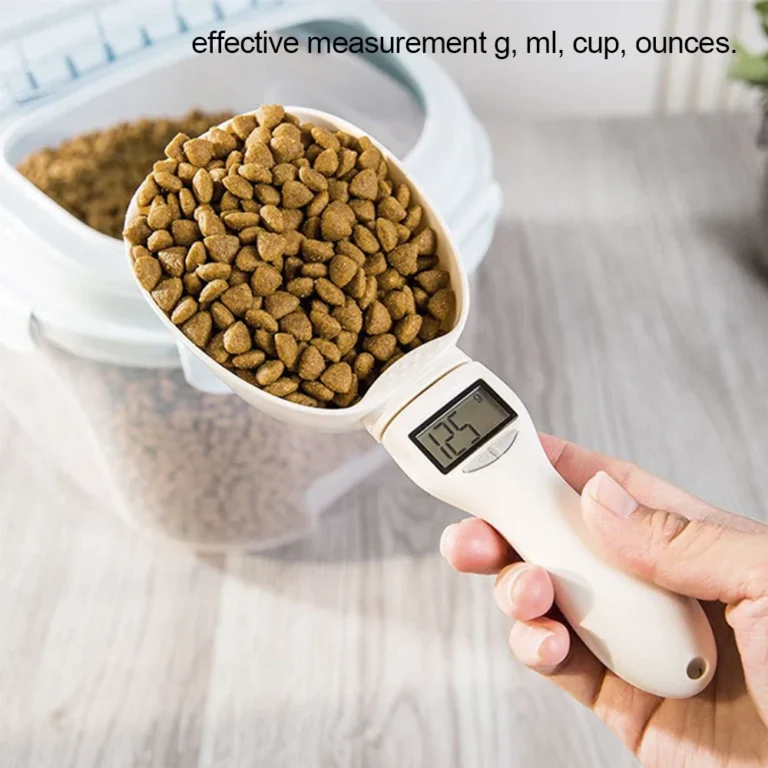
For a dog this size, weigh the food rather than scooping it. A puppy’s daily portion is often under 100 grams, and a heaped scoop can be 20% more than a level one. A scoop with a built-in scale makes that easy, and treats used for training come out of the same daily total.
Weighs each portion as you scoop it, so a small puppy's daily amount stays what the bag says.
$4.45
Check Price on AliExpressMeals also run the toilet timetable: most puppies need to go out within a few minutes of eating, which our toilet training guide builds the day around.
6 to 12 months: two meals, then adult food
From about six months most small puppies do well on two meals a day. Small breeds reach their adult size well before big ones, often between nine and twelve months, and that is the time to change to an adult small-breed food. Your vet can tell you when growth has levelled off.
Change food over about a week, never overnight: a quarter new for two days, half for two days, three quarters for two days, then all new. Our guide to sensitive stomachs has the day-by-day version, and what to do if the stools go soft.
How to tell it is going right
- Weigh the puppy every week and write it down. Steady gain is what you want; a week with no gain, or a loss, is a reason to ring the vet.
- Feel the ribs. You should be able to feel them easily under a thin layer, without seeing them. On a long-coated puppy you have to feel; the coat hides everything.
- Firm stools, two to four times a day at this age.
- Bright, playful, sleeps a lot. Puppies do.
Wet or dry?
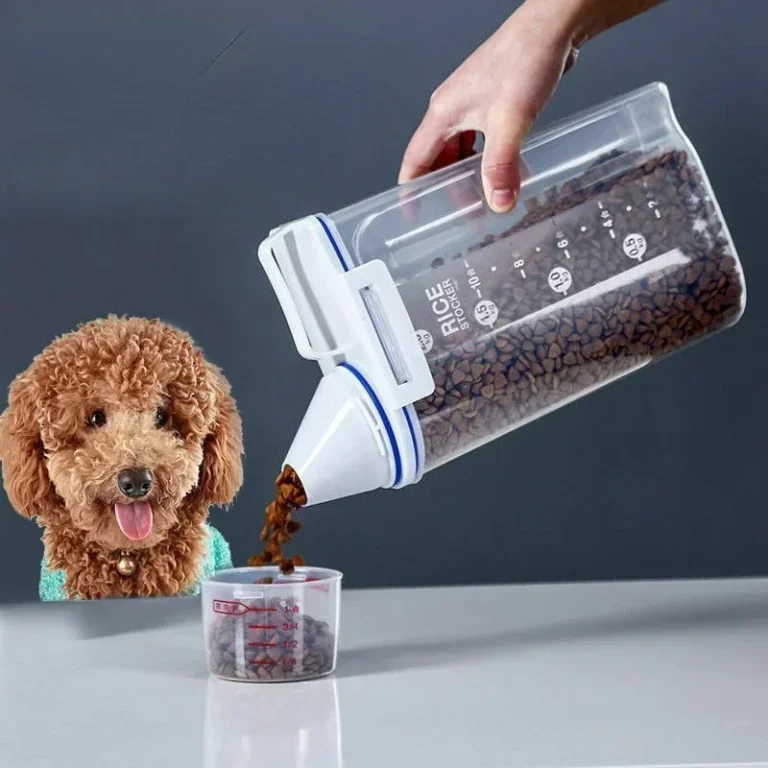
Either, as long as it says complete and is made for puppies. Dry food is cheaper, keeps in an airtight container and works in puzzle toys. Wet food has more water and some fussy puppies prefer it. Mixing the two is fine; reduce each so the total stays right, which is easier if you weigh both.
What not to add
- Calcium or vitamin supplements on top of a complete food. Too much calcium can harm a growing skeleton, and the food already has the right amount.
- Cow’s milk. Weaned puppies do not need it, and many cannot digest it well.
- A lot of table food. It unbalances a diet that is carefully balanced, and it teaches begging early. Our guide to what dogs can and cannot eat lists the foods that are never safe.
Ring the vet the same day if
the puppy misses more than one meal, vomits more than once, has diarrhoea with blood or lasting more than a day, seems weak or wobbly, or stops gaining weight. Small puppies dehydrate and lose condition quickly, so it is better to ring early.
This guide is general information for healthy small-breed puppies. Your vet sees your puppy and can adjust any of it.