



Almost every grooming mistake comes from the same place: buying tools for a breed instead of for a coat. Two dogs of the same breed can carry different coats, and two completely unrelated breeds can need identical kit. A slicker brush that is perfect on a cockapoo does very little on a labrador, and the deshedding tool that strips a labrador’s undercoat will cut a cockapoo’s coat to pieces.
So the first job is not shopping. It is working out what is actually growing on your dog.
Find the Coat, Then Buy the Tools
| Coat | Typical breeds | Core tools | How often | What goes wrong |
|---|---|---|---|---|
| Smooth, short | Boxer, staffie, beagle, dachshund | Rubber curry or grooming glove | Weekly | Nothing much; owners over-bathe out of boredom |
| Double coat | Labrador, husky, german shepherd, corgi | Undercoat rake, deshedding tool, slicker | 2 to 3 times weekly, daily when blowing | Shaving it, which wrecks the insulation permanently in some dogs |
| Curly or wool | Poodle, cockapoo, bichon, doodles | Slicker plus a steel comb, always both | Daily or every other day | Brushing only the surface while mats form underneath |
| Silky, long | Yorkshire terrier, shih tzu, setter, spaniel | Pin brush, steel comb, thinning scissors | Daily around ears and armpits | Mats behind the ears going unnoticed for weeks |
| Wire | Schnauzer, border terrier, wire fox terrier | Stripping knife or a groomer, slicker | Weekly, hand-strip a few times a year | Clipping instead of stripping, which softens the coat for good |
| Hairless or near | Chinese crested, xolo | Skin care rather than brushes | Skin checks weekly | Sunburn, blackheads, dry skin |
Two rules from that table are worth stating on their own. Do not shave a double coat to keep a dog cool; the undercoat is insulation against heat as well as cold, and in some dogs it grows back patchy or never properly at all. And a wire coat that gets clipped rather than hand-stripped loses its texture and much of its colour, permanently.
Brush, Then Comb. Always in That Order
This is the single technique that separates people whose dogs get matted from people whose dogs do not. A brush works the coat. A comb tests it.
A slicker brush glides over the top of a coat and can leave a mat sitting underneath completely untouched, which is why a dog can be brushed daily and still arrive at the groomer matted to the skin. A steel comb cannot do that. If it will not pass cleanly from skin to tip, there is a tangle there, and you have found it while it is still a tangle rather than a mat.
- Work in sections, lifting the coat and brushing from the skin outwards, not raking across the top
- Follow every brush with the comb, wide teeth first, fine teeth last
- Check the four places mats always start — behind the ears, in the armpits, on the inner thigh, and under the collar
- Take the collar off to brush, and put it back on afterwards
- Press lightly with a slicker; those pins cause brush burn on skin if you lean on them
Matting Is a Welfare Problem, Not a Tidiness One
A mat is not untidy hair. It is a knot that tightens as it grows, pulling constantly on the skin beneath it, restricting blood flow and trapping moisture against the body. Severe matting causes sores, and in bad cases the skin underneath tears when the mat is finally removed. Dogs hide this well, because the pull is constant rather than sudden.
Never bathe a matted dog. Water tightens a mat like a knot in wet rope, and what was brushable dry becomes solid wet. Demat first, bathe second, in that order, without exception.
For small tangles, work from the outer end inwards with your fingers and a dematting comb, holding the hair at the base so the pull goes into your hand rather than the dog’s skin. Short sessions. If the dog objects, stop — a dog who learns that grooming hurts will fight the brush for the rest of its life, and that costs you far more than one trip to a groomer.
For anything tight against the skin, or a coat matted over more than a small area, book a professional. A groomer clipping a badly matted dog short is doing the kind thing, and it is worth saying plainly that a shave-down in that situation is a rescue, not a failure.
Bathing: Less Often Than You Think
Most dogs need a bath every four to eight weeks, and some smooth-coated dogs need one two or three times a year. Washing more often than the coat requires strips the oils that keep skin healthy, and the itchy dog with flaky skin is very often an over-washed one.
- Brush and comb before the bath, never after only
- Use dog shampoo — dog skin sits at a different pH to ours and human shampoo is the wrong formulation, however gentle the label
- Lukewarm water, tested on your wrist. What feels pleasant to you is often too hot for a dog
- Get product down to the skin, which is where the dirt is. A bath brush that holds the shampoo does this in one pass instead of two
- Rinse until the water runs completely clear, then rinse again — shampoo residue is one of the most common causes of itching after a bath, and it is entirely avoidable
- Cotton wool in the ears for dogs who will tolerate it, and never pour water over the face
Drying, and the Hot Spot Nobody Expects
A thick double coat can hold damp against the skin for a surprisingly long time, and warm damp skin is where hot spots — acute moist dermatitis — begin. They can go from nothing to an open, painful patch the size of a palm within a day. This is the real reason drying matters, and it is why a dog that looks dry on the outside may not be.
Blot, do not rub. Rubbing a long or curly coat tangles it and creates the mats you will be combing out tomorrow. A microfibre towel absorbs several times what a bath towel does and wrings out, so one towel finishes the job. For a double coat, finish with a dryer on a cool or low setting, working against the lie of the coat so air reaches the skin.
Human hairdryers run hotter than dog skin tolerates and have burned dogs. If you use one at all, use the cool setting and keep it moving.
Nails: The Job Everyone Puts Off
Nails should not touch the floor when a dog stands. If you can hear clicking on a hard floor, they are already long. Overgrown nails push the toes out of alignment and change how a dog carries its weight, and over years that alters gait and loads joints badly. In extreme cases a nail curls back into the pad.
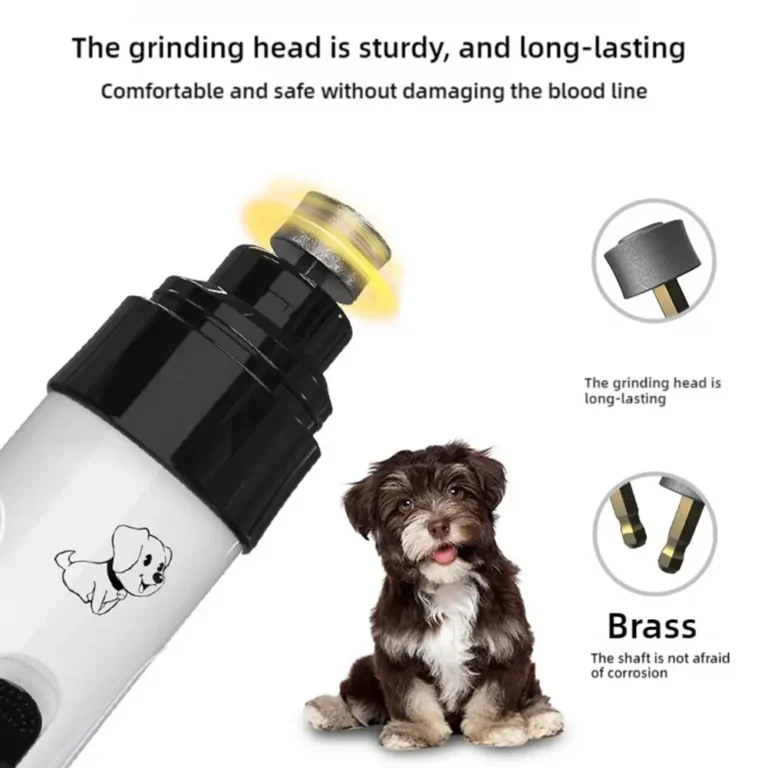
The reason people avoid it is the quick — the blood vessel and nerve inside the nail. Cut it and the dog bleeds and it hurts, and most dogs remember. On white nails the quick is visible as a pink core. On black nails it is not, which is where a grinder earns its price: you take off a little at a time and watch the cut face, stopping when a small grey or pink oval appears in the centre.
- Every two to four weeks for most dogs; dogs walked on pavement wear them down and need it less
- Trim little and often — the quick recedes as the nail shortens, so frequent small trims fix long nails that one big cut cannot
- Clippers are faster, a grinder is safer on black nails, and quieter models matter because the noise is what most dogs object to
- Do not forget dewclaws — they touch nothing, so they never wear down, and they are the ones that curl into the leg
- Keep styptic powder in the kit before you need it. Cornflour works in an emergency
If your dog already hates having its feet touched, spend a fortnight paying them for it — touch a paw, treat, let go. Then hold, treat. Then the tool near the paw without using it. Rushing this is how a lifelong problem starts.
Ears, Eyes and Teeth
- Ears — check weekly. A healthy ear is pale, dry and almost odourless. Redness, a yeasty smell, dark discharge or head-shaking means a vet, not a cleaner. Never put a cotton bud down the canal
- Eyes — wipe discharge from the inner corner with a damp cloth, outwards, away from the eye. Trimming the hair just below the inner corner reduces staining because that hair wicks tears down the face
- Teeth — brushing several times a week is the only home measure that reliably prevents periodontal disease, which arrives earliest in small breeds. Dog toothpaste only; human paste contains fluoride and sometimes xylitol, both of which are toxic to dogs
One caution on grooming wipes generally: they clean, they do not treat. A dog whose ears keep needing cleaning has a problem a wipe will not fix, and repeatedly cleaning an infected ear delays the diagnosis.
Shedding Season
Double-coated dogs blow their undercoat twice a year, usually spring and autumn, and it is genuinely dramatic. There is no product that stops it. What you can do is get the loose coat out on your terms rather than off the furniture.
An undercoat rake or deshedding tool reaches the dead undercoat that a slicker skims over. Use it in short passes with light pressure. These tools have a blade edge, and leaning on them cuts guard hairs and scores skin. Ten minutes daily during a coat blow beats an hour once a week, and it beats shaving the dog, which does not reduce shedding — it just makes the shed hair shorter.
When to Use a Professional
- Wire coats needing hand-stripping, which is a skill and takes hours
- Any matting close to the skin
- Clipping around the face, feet and sanitary areas if you are not confident with scissors near a moving dog
- Dogs who have already learned to fight grooming — a groomer breaking that cycle is worth the money
- Anaesthetic-free dental scaling: no. It polishes the visible surface and leaves the disease under the gumline, which is where it matters
The Short Version
- Buy for the coat in front of you, not for the breed on the paperwork
- Brush, then comb. The comb is the test and it is the step people skip
- Never bathe a matted dog — water tightens mats
- Most dogs need bathing every four to eight weeks, not weekly
- Rinse twice; residue is a common cause of post-bath itching
- Dry to the skin on double coats, or you risk hot spots
- Nails every two to four weeks, little and often, dewclaws included
- Never shave a double coat to cool a dog down
Browse the grooming kit we list, brushes and combs through to dryers: Grooming.
This is general guidance, not veterinary advice. Persistent itching, ear problems, skin changes or a dog who has become painful to groom should be seen by a vet.