



Fireworks are the noise dog owners most often say their dog is afraid of. In a University of Bristol study of dog owners, almost half of those interviewed described at least one sign of fear when their dog heard loud noises, yet only about a quarter had called their dog “fearful” when asked in a general survey. Fireworks topped the list of triggers. The gap matters: a lot of frightened dogs are simply read as restless, clingy or naughty for the evening.
This guide runs in the order you will need it: the weeks before, the day itself, the night, and the morning after. The dates to plan around are Bonfire Night on 5 November, Diwali (8 November in 2026), New Year’s Eve, and in the US, the Fourth of July. Fireworks rarely stay on the night itself, so count on a few evenings either side.
First, know what fear looks like in a small dog
Small dogs rarely do anything dramatic. The signs are easy to miss, especially if you are watching the window rather than the dog:
- Trembling or shaking, and panting when the room is not warm
- Pacing, or being unable to settle in a spot they usually love
- Hiding under furniture, or pressing into you and refusing to move
- Lip licking, yawning, ears flat, tail tucked
- Turning down food or a treat they would normally take
- Drooling, or an accident indoors from a dog that is house trained
- Trying to get out: scratching at doors, squeezing through gaps
Turning down food is the useful one. A dog that still takes a treat is worried but coping. A dog that cannot eat at all is past the point where distraction works, and that is worth telling your vet about before the next fireworks season, not after it.
Three weeks before
- Talk to your vet now if last year was bad. The medicines vets use for noise fear work best given before the fear starts, and some need a trial run at home to check the dose. Three weeks is enough time to do that. The night before is not.
- Build the den early. Pick the quietest room, ideally one with no outside wall or with heavy curtains. Put a covered bed or crate there, or a bed pushed under a table with a blanket over the top, and start feeding treats and chews in it now, so it is already a good place before it has to be a safe one. A bed with high soft sides, like a faux fur donut bed, gives a small dog something to burrow into. It is a comfortable place to hide, not a treatment: it does nothing about the fear itself.
- Try sound recordings, gently, if your dog is only mildly worried. Play firework sounds very quietly while your dog eats or plays, and raise the volume over days, never to the point where they stop eating or look up. If they react, you went too fast; go back a step. This works best in puppies and mild cases. A dog that panics at the real thing needs a vet and a behaviourist, not a louder playlist.
- Check the microchip details and the tag. Frightened dogs bolt, and reports of lost dogs go up around fireworks nights. Make sure the chip registration has your current phone number and the collar or harness has a tag on it.
On the day
- Walk early, in daylight. Get the long walk done well before dusk, and keep your dog on the lead even in places you normally let them off. Someone always starts early.
- Feed earlier than usual. A frightened dog will not eat, and an empty stomach makes a long evening worse.
- Garden trips on the lead after dark, even in a fenced garden. A bang can send a small dog through a gap you did not know was there.
- Shut the house down before it starts. Windows and cat flaps closed, curtains drawn, lights on so flashes show less, and the TV or music on at a normal volume to blur the bangs.
- Do not leave your dog alone that evening if you can avoid it.
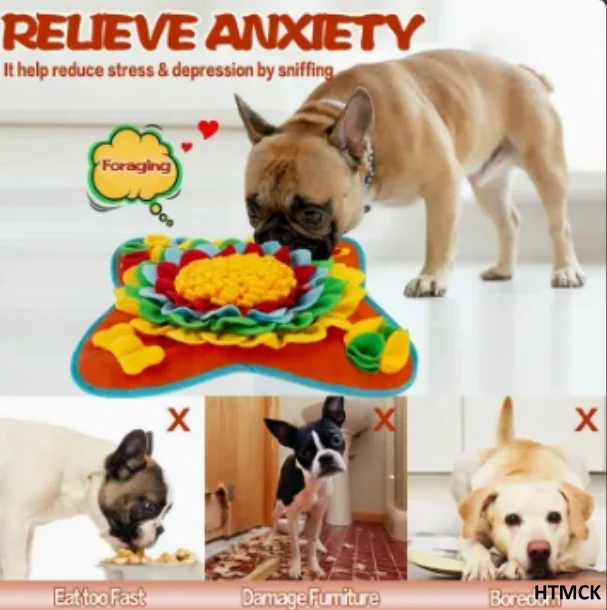
- Have something to do ready. Licking and sniffing are calming for many dogs. A lick mat spread with a little wet food or plain yoghurt and frozen beforehand, or a snuffle mat with part of their dinner hidden in it, gives them a job. Both only help a dog that can still eat. If yours walks past the mat, that tells you where they are.
During the fireworks
Comfort them if they come to you. The old advice to ignore a frightened dog so you do not “reward the fear” does not hold up. Fear is an emotion, not a trick; you cannot teach a dog to be more frightened by stroking it. Dogs Trust’s own advice is to comfort and reassure, and to stay calm yourself. What does not help is fussing at a dog that is trying to settle, or a voice that sounds as worried as they feel.
Let them hide. If they have gone under the bed or into the den, that is the plan working. Do not pull them out to check on them.
Never tell them off for barking, trembling or an accident on the floor. It adds a second thing to be afraid of.
Do not take them to a display, even a dog that seems fine with noise. A crowd, smoke and bangs at close range is a lot to ask of a small dog, and there is nothing in it for them.
What the shelf sells, and what it does
Pressure wraps (snug vests sold for anxiety). The studies are few and small. A review in Veterinary Evidence concluded they may have a small benefit and may have none at all. Worth trying on a dog that tolerates wearing one, put on well before the evening and never for the first time on the night, but not something to rely on.
Old-style sedatives. Acepromazine, sometimes still handed out as a “calmer”, sedates a dog without reducing fear. The European Society of Veterinary Clinical Ethology says it is not suitable for acute fear, because it has no anti-anxiety effect: a dog can be sedated and still frightened. If you have some left over from a previous year, ask your vet before using it. There are better options now, and your vet can talk you through them.
Calming music. It will not stop a dog hearing a rocket, but steady sound at normal volume takes the edge off the gaps between bangs. Free, and fine to use alongside everything else.
When to see the vet
- Your dog shakes, pants or hides for hours, or is still not right the next day
- They hurt themselves trying to escape, or have chewed through a door or a crate
- The fear is spreading to other sounds: doors banging, thunder, the oven fan
- An older dog who never minded fireworks has started to
That last one deserves a closer look. In a small study at the University of Lincoln, dogs with joint or muscle pain developed a fear of noise about four years later in life than dogs without pain, and their fear spread more widely. One explanation is that a startle makes the dog tense up, and tensing hurts. It is only twenty dogs, but it is a good reason to have a dog that has suddenly become noise shy checked for pain before anything else. Our Shih Tzu health guide covers what else tends to show up as small dogs get older.
The morning after, and next year
Take the first walk somewhere quiet, and look out for spent fireworks in the grass; dogs pick them up. Then write down what your dog did and when it was worst, while you still remember. That note is what makes next year’s conversation with your vet useful, and it is also how you will notice if things are getting worse year on year.
For puppies, the best protection is meeting everyday noises calmly and early, while they are still young enough to take new things in their stride; our puppy guide covers those first months. And if your dog barks at every bang outside even when there are no fireworks, the barking guide goes through what that bark is telling you.